
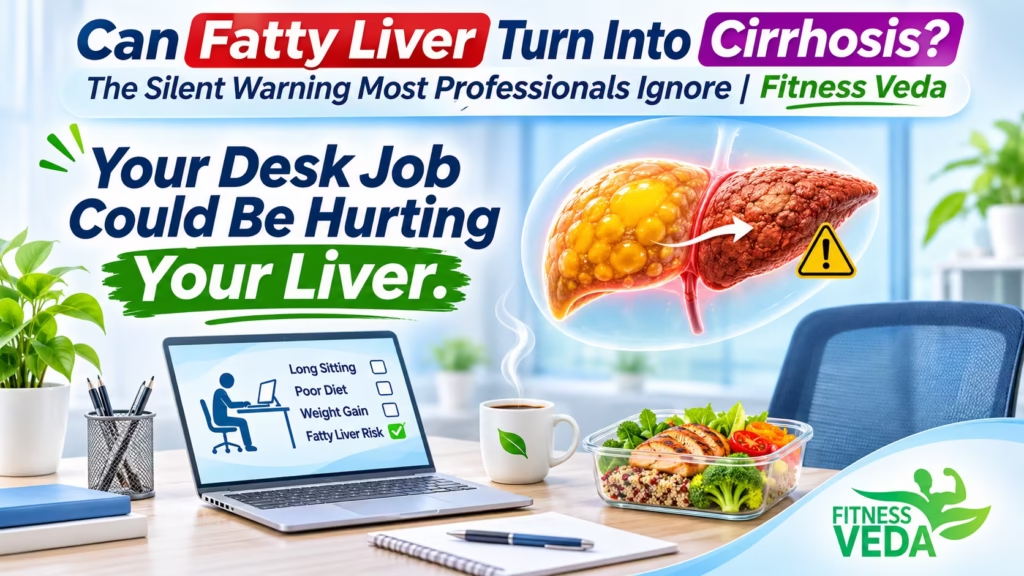
Can Fatty Liver Turn Into Cirrhosis? The Hidden Truth Every Indian Must Know | Fitness Veda
Fatty Liver Is Not “Just a Little Fat”
Your ultrasound report says “fatty liver, grade 1.” The doctor tells you not to worry too much. You feel fine. So you forget about it.
This is exactly what most people do. And this is why fatty liver is called a silent problem.
Here is the truth. Fatty liver is very common, and in many people it stays mild. But in some people, it slowly moves forward, step by step, without loud signs. So the big question is: can fatty liver turn into cirrhosis? In some cases, yes, it can. The good news is that it does not happen overnight, and the early stage is where you have the most power.See content credentials
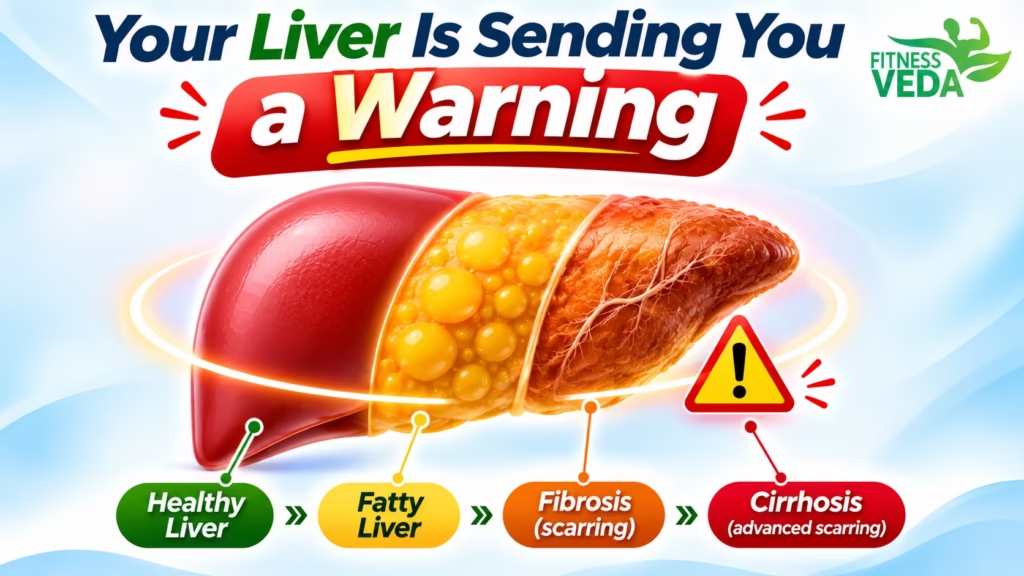
In this guide, we will walk through each stage in simple words, so you know what is happening inside your body and what you can start doing today.
In simple words: fatty liver is a warning light, not a final result.
What Is Fatty Liver, Really?
Your liver is one of the hardest-working organs in your body. It helps process the food you eat, stores energy, and filters out waste every single day.
A fatty liver means extra fat has started to collect inside your liver cells. A little fat is normal. Trouble begins when the fat keeps building up.
There are two main types. The first is linked to alcohol. The second, which doctors now call MASLD (earlier known as NAFLD, or non alcoholic fatty liver disease), is linked to belly fat, high blood sugar, insulin resistance and an inactive lifestyle. In India, the second type is becoming very common, even in people who never drink.
In simple words: fatty liver means your liver is storing more fat than it can handle.
Can Fatty Liver Turn Into Cirrhosis? The 4-Stage Journey
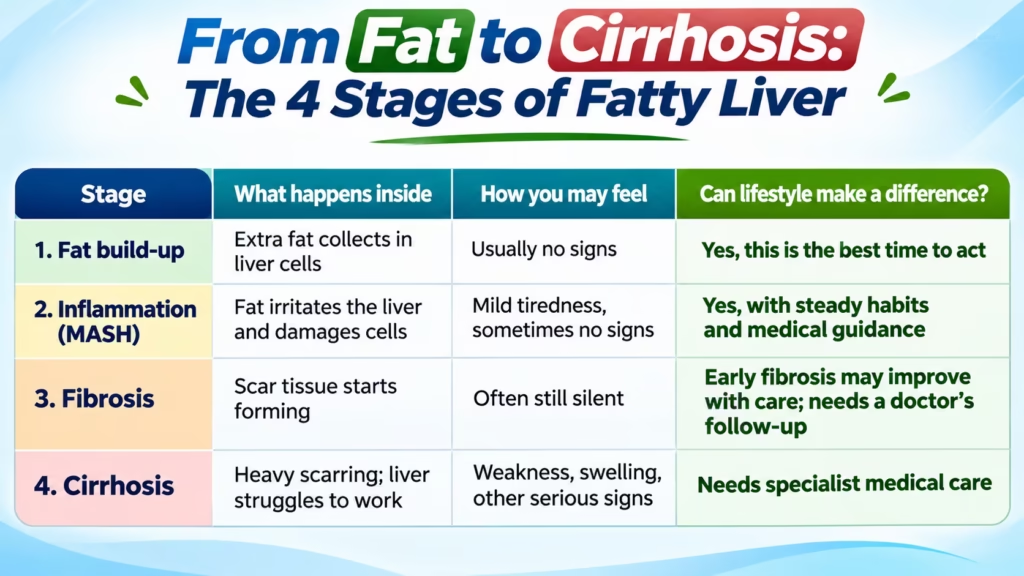
Fatty liver does not jump straight to cirrhosis. It moves through stages, and each stage gives you a chance to act. Here is the journey, one step at a time.
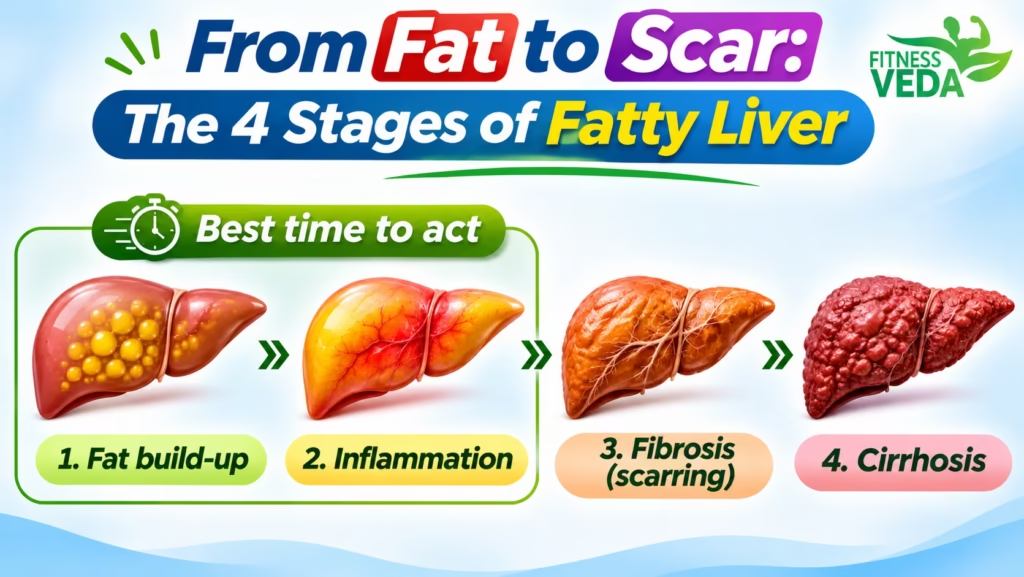
Stage 1: Extra Fat Builds Up in the Liver Cells
This is the starting point, often called simple fatty liver. Fat collects inside the liver cells, but there is little or no damage yet. Most people feel completely normal at this stage. It is usually found by chance in an ultrasound or a routine blood test.
In simple words: the liver is carrying extra weight, but it is still working well.
Stage 2: Inflammation and Liver Cell Damage
In some people, the extra fat starts to irritate the liver. The liver becomes inflamed, and some liver cells get hurt. Doctors call this MASH (earlier known as NASH). You may still not feel much, though some people notice tiredness or a heavy feeling on the right side of the belly.
In simple words: the fat is no longer just sitting there. It has started to cause harm.
Stage 3: Fibrosis, When Scar Tissue Starts Forming
If the inflammation keeps going, the liver tries to heal itself again and again. Each time, it leaves behind a little scar tissue. This is called liver fibrosis. Think of it like a small cut on your skin that heals with a mark. Now imagine that happening over and over inside your liver.
In simple words: fibrosis is your liver getting scars from long-term damage.
Stage 4: Cirrhosis, When Scarring Becomes Severe
When fibrosis becomes advanced, the scars spread and the liver becomes hard and lumpy. This is cirrhosis. At this stage, the liver struggles to do its daily work, and the damage is much harder to undo. This is why catching fatty liver early matters so much.
In simple words: cirrhosis is heavy scarring that stops the liver from working properly.
Fatty Liver Stages at a Glance
Table headline: Fatty Liver Stages Made Simple
Not Every Fatty Liver Turns Into Cirrhosis
Let’s clear one big fear. Having fatty liver does not mean you will get cirrhosis. Many people stay at the first stage for years, and some see their liver improve when they change their habits.
The risk goes up when certain factors stay with you for a long time. These include:
- Extra belly fat around the waist
- High blood sugar, prediabetes or type 2 diabetes
- Insulin resistance, when your body does not respond well to insulin
- High triglycerides or cholesterol
- Regular alcohol use
- Very little physical activity
- A diet full of sugary drinks, sweets, maida and fried or packaged foods
The more of these you have, the more carefully you should watch your liver. Regular check-ups, like liver function tests or a FibroScan if your doctor suggests it, help track what is really going on.
In simple words: fatty liver is a fork in the road, and your daily choices decide the direction.
5 Powerful Habits to Protect Your Liver in the Early Stage
Here is the exciting part. In the early stage, your liver can respond beautifully to simple, steady changes. You do not need a crash diet or a costly plan. You need consistency.
1. Reach and Keep a Healthy Weight
Even a small, slow weight loss can make a real difference to liver fat. Aim for gradual progress, not fast results. Crash diets can stress the body and are hard to keep up.
In simple words: lose weight slowly and steadily, and your liver feels the benefit.
2. Eat a Balanced, Liver-Friendly Diet
Fill your plate with vegetables, dal, whole grains like millets and brown rice, fruits, nuts, seeds and healthy fats. Add protein to every meal. Cook at home more often, using less oil.
In simple words: eat real, home-style food, and keep your plate colourful.
3. Move Your Body Every Day
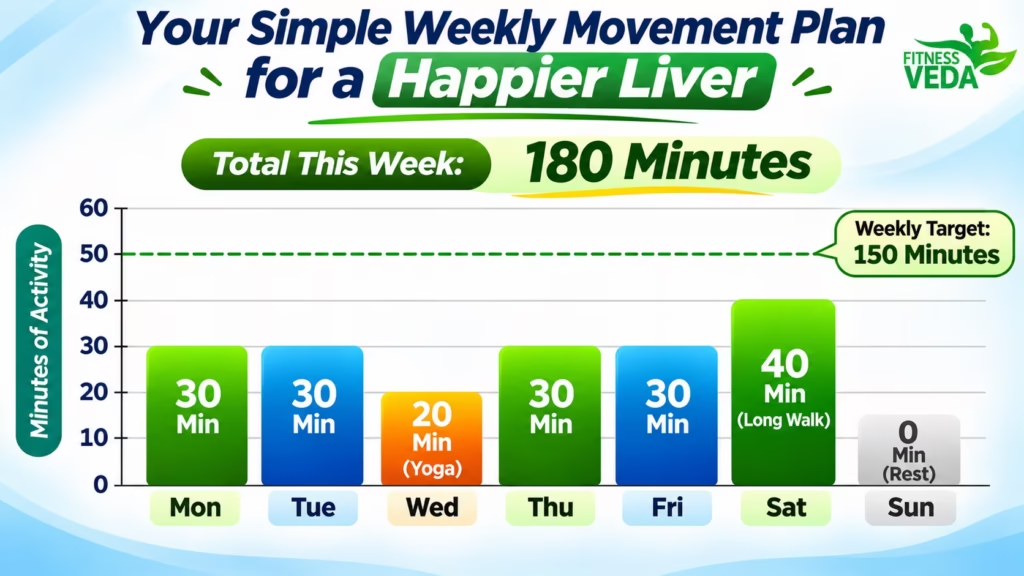
Regular exercise helps your body use sugar and fat better. Brisk walking, cycling, yoga or light strength training all help. A common target is at least 150 minutes of moderate activity a week.
In simple words: a 30-minute walk on most days is a great start.
4. Cut Down Sugary and Processed Foods
Sugary drinks, packaged juices, sweets, biscuits, maida, chips and fried snacks push more fat into the liver. Swap them for buttermilk, nimbu pani without sugar, roasted chana or fruit.
In simple words: less sugar in your cup means less fat in your liver.
5. Avoid Alcohol
Alcohol adds extra work and stress for a liver that is already carrying fat. If you have fatty liver, the safest choice is to stay away from it.
In simple words: give your liver a break, and skip the drink.See content credentials
Where Do Supplements Fit In?
Let’s be honest. No supplement can replace a good diet, regular exercise and your doctor’s advice. But a well-chosen supplement can support your body while you build better habits.
One big driver behind fatty liver is insulin resistance. When your body does not use insulin well, extra sugar is more likely to be stored as fat. That is why supporting a healthy insulin response is an important part of overall metabolic health.
This is where Berberine+ with Ceylon Cinnamon from Fitness Veda comes in.
- Berberine is a natural compound found in plants like Daruharidra (Indian barberry). It switches on an enzyme in your cells called AMPK. Think of AMPK as your body’s energy manager. When it is active, your cells get better at using sugar for energy, which supports a healthy insulin response.
- Ceylon Cinnamon is the gentler, “true” cinnamon. It supports healthy glucose metabolism and adds to berberine’s support.
Together, they support healthy blood sugar levels and metabolism, as part of a balanced diet and active lifestyle. Always speak with your doctor before starting any supplement, especially if you take medicines for diabetes, have a liver condition, or are pregnant or breastfeeding.
In simple words: supplements support your effort. They don’t replace it.
Conclusion: Your Liver Is Waiting for You to Act
So, can fatty liver turn into cirrhosis? In some people, yes. It can move from fat build-up to inflammation, then to scarring called fibrosis, and in advanced cases to cirrhosis. But here is the powerful truth: it is not your destiny.
Your liver is a fighter. It does its best work for you every day, quietly, without asking for anything. When you catch fatty liver early, you have a real chance to stop the story right there.
Think of your fatty liver report as a gift, not a punishment. It is your body saying, “Please help me now, before it gets harder.” And you can. Start with one small step today, like a 30-minute walk. Tomorrow, swap one sugary drink for buttermilk. Next week, add one more vegetable to your plate. Small wins, repeated every day, build a healthier liver.
Here is what you get when you start today: more energy, a lighter body, steadier sugar levels and real peace of mind about your health.
Ready to take charge of your liver health?
- Read more: Explore our easy guides on the fatty liver diet, belly fat and insulin resistance on the Fitness Veda blog.
- Eat smarter: Download our free Indian liver-friendly diet chart on the Fitness Veda website.
- Support your metabolism: Discover Berberine+ with Ceylon Cinnamon at Fitness Veda, made to support a healthy insulin response as part of your daily routine.
- Stay updated: Follow Fitness Veda on Instagram and LinkedIn for simple, science-backed health tips every week.
Your liver works for you every day. Today, start working for it. Visit the Fitness Veda website now.