
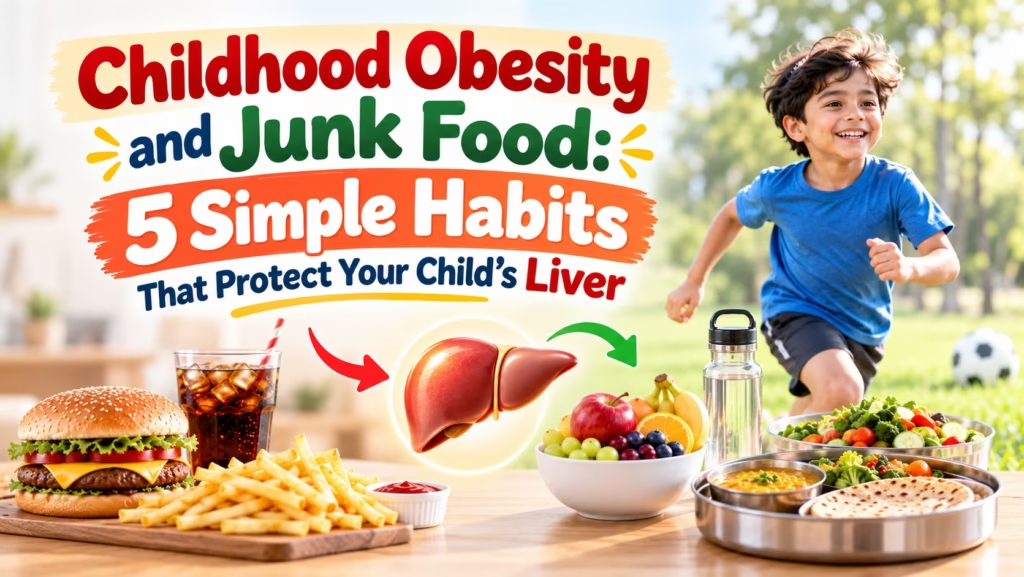
Childhood Obesity and Junk Food: 5 Simple Habits That Protect Your Child’s Liver
Every parent wants to see a happy child. So when your little one asks for a burger, a cold drink or a chocolate, saying yes feels easy. However, these small yeses add up.
Over time, childhood obesity and junk food can become part of daily life, and your child’s liver often feels the pressure first, without any warning signs. The good news is simple. Habits are learned, so habits can also change. In this article, you will see how junk food affects kids, why sugary drinks matter, and which easy steps you can start at home today.
Childhood Obesity and Junk Food: When Love Becomes a Habit
Think about a normal week at home. A fast-food treat comes on Saturday. A cold drink appears when guests arrive. A chocolate stops a tantrum. Each moment looks harmless. Together, though, they build a pattern.
Children do not choose habits alone. They eat what we serve, and they copy what they see. Because of this, a “special treat” slowly turns into the daily normal.
Meanwhile, junk food is made to be hard to resist. It carries plenty of sugar, refined flour and unhealthy fats, yet it offers very little fibre or real nutrition. A child can eat a lot of calories and still feel hungry soon after. As a result, extra weight can build up quietly.
Here is the key point: this is not about blame. Loving parents make these choices every day. The real goal is to let love and health work together.
Effects of Junk Food on Kids’ Health
Junk food does not harm a child in one day. Instead, the effects grow slowly. Let us look at three of them.
Extra Weight, Step by Step
When a child eats more energy than the body uses, the body stores the extra as fat. Packed snacks, fried food and sweet treats make this very easy. Moreover, children who carry extra weight early often find it harder to manage weight later in life. That is why early habits matter so much.
Energy Highs and Lows
Sugary food gives a quick burst of energy. Soon after, the energy drops. Your child may feel tired, cranky or unable to focus on homework. Then they ask for another snack, and the cycle starts again.
A Busy Liver
The liver works like the body’s busy kitchen. It handles the sugar and fat that your child eats. When the diet is full of sugar and fried food, the liver may store extra fat. Over time, this can lead to fatty liver. Doctors now see fatty liver in children, mostly linked to extra weight. Early on, it often shows no symptoms. For this reason, prevention at home is so powerful.
How Sugary Drinks Affect Children’s Health
Sugary drinks deserve special attention because they hide in plain sight. Cold drinks, packed juices and flavoured milk taste light, but they carry a lot of sugar. Worse, liquid sugar does not fill a child’s stomach the way real food does. So the child still feels hungry and eats more.
Look at the chart below. One small cold drink can hold about eight teaspoons of sugar. Many health bodies suggest children keep added sugar to about six teaspoons a day or less. In other words, a single bottle can cross the limit before lunch.
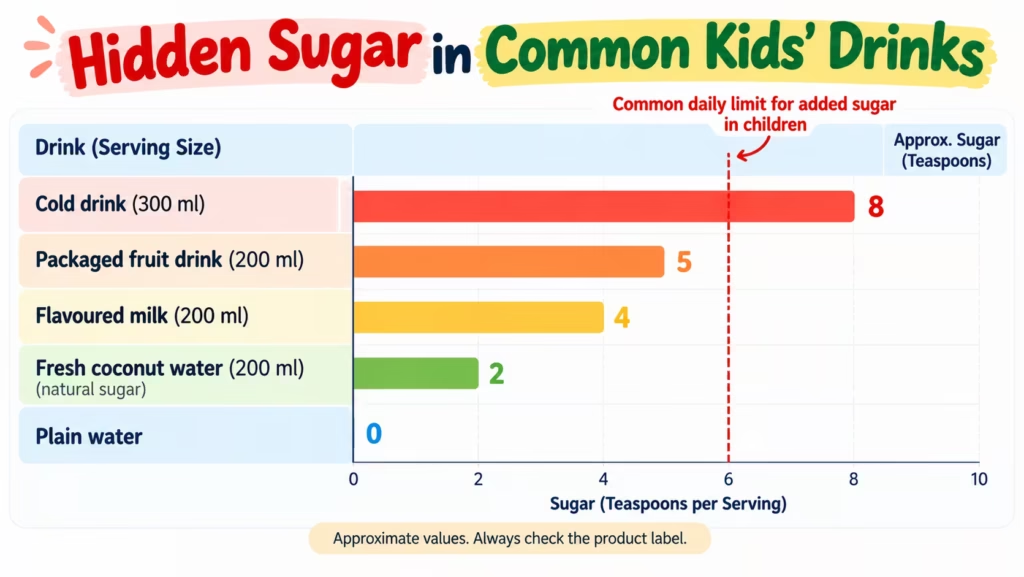
Sugary drinks also affect the body in other ways. They add extra calories without nutrition. They can harm teeth. They may also give the liver more sugar to handle each day. Therefore, swapping even one sugary drink a day for water is a smart first step.
How to Keep Your Child’s Liver Healthy
You do not need a complex plan. Instead, you need steady, simple habits. These four steps support a healthy liver and a healthy weight.
- Build a balanced plate. Fill half the plate with vegetables and fruit. Add dal, curd, paneer or eggs for protein. Then add roti or rice for energy.
- Move every day. Aim for at least one hour of active play. Cycling, football, skipping and park games all count.
- Protect sleep. Good sleep helps children manage hunger and mood. Fix a regular bedtime and keep screens away from the bedroom.
- Visit your paediatrician. Regular growth checks show how your child is doing. If you worry about weight or eating habits, ask your doctor for personal advice.
Healthy Eating Habits for Children at Home
Big rules often fail with kids. Small swaps work better. First, keep the home stocked with good options. Next, make the healthy choice the easy choice. Finally, let your child help. Children eat more happily what they helped to make.
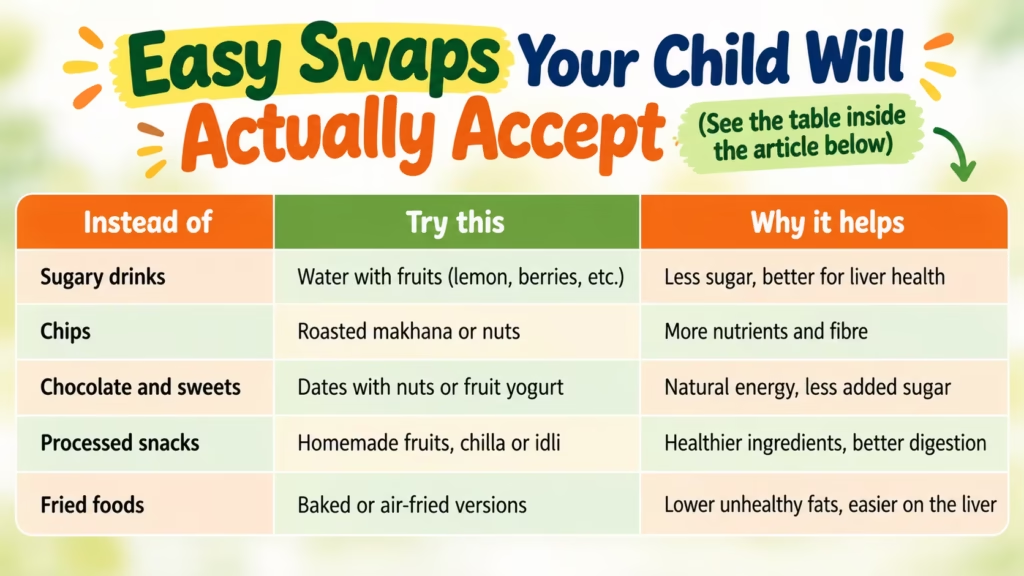
Here is a table of easy swaps to try this week.
Table: Easy Swaps Your Child Will Actually Accept
Five Habits to Start Today
- Cook more at home. Homemade meals give you control over oil, salt and sugar.
- Offer fresh fruit. Keep a fruit bowl where children can see it.
- Choose water first. Make it the default drink at every meal.
- Play outdoors. Fresh air and movement help children use their energy well.
- Lead by example. Eat the same healthy food yourself, because children notice everything.
Parents Are the Best Teachers
Children learn what they see at home every day. If they see you reach for water, they will try water. If they see you enjoy a salad, they may take a bite. So do not say “eat this.” Instead, show them how. Praise effort, not just finishing the plate. In addition, keep treats as treats, not as rewards or bribes. Love shown through time and attention beats love shown through sweets.
Conclusion: Start Small, Win Big for Your Child’s Liver
Here is the big picture. Childhood obesity and junk food are linked through daily habits, not single meals. One burger will not harm your child. However, a pattern of sugary drinks, fried snacks and low activity can slowly add stress to a growing body, including the liver. The best part is that you hold the power to change the pattern, starting this very week.
Pick just one habit today. Swap one cold drink for water. Add one fruit to the evening snack. Cook one extra family meal at home. Then build on it. Small steps repeated daily create strong, healthy habits that last a lifetime. Remember, children learn from what they see every day. Show them health, and they will carry it forward.
What can Fitness Veda help you with?
Many families struggle with confusing food advice, busy schedules and constant snack battles. That is where we can help. At Fitness Veda, you will find simple, practical guidance on liver-friendly diet and daily wellness habits for the whole family. For adults at home who want extra daily support, our liver health range, including Liver Detox, NAC+ and TUDCA+, is made to support normal liver function as part of a healthy diet and active lifestyle. Please note that supplements are not a substitute for a balanced diet. For children, always speak to your paediatrician before using any supplement.
Learn more about how food and supplements support your liver: Read more diet tips and explore the liver health range at myfitnessveda.com
Start today. Your child’s healthy tomorrow begins with the plate you serve tonight.