
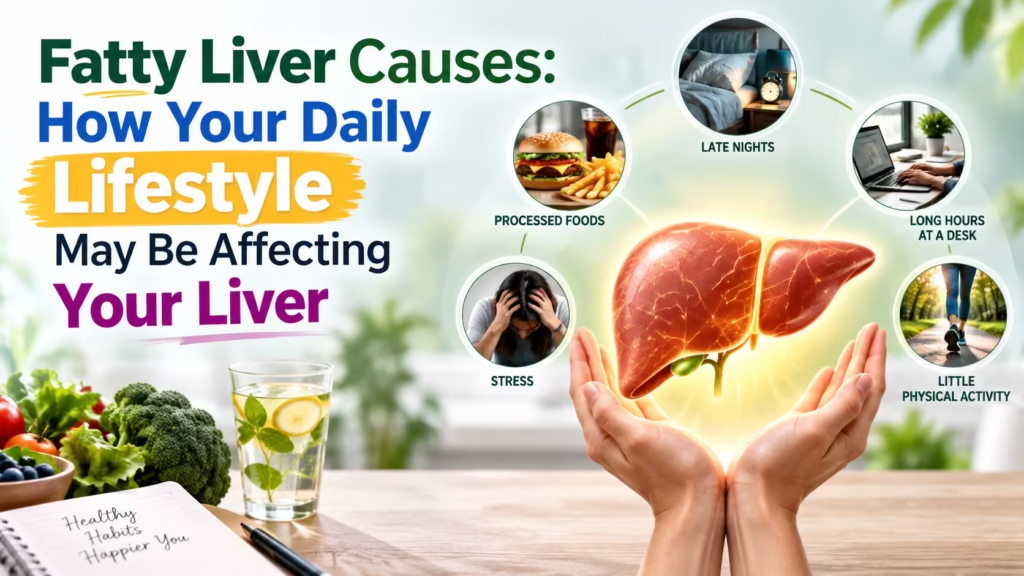
Fatty Liver Causes: How Your Daily Lifestyle May Be Quietly Affecting Your Liver
When the Report Says “Fatty Liver,” and You Don’t Even Drink
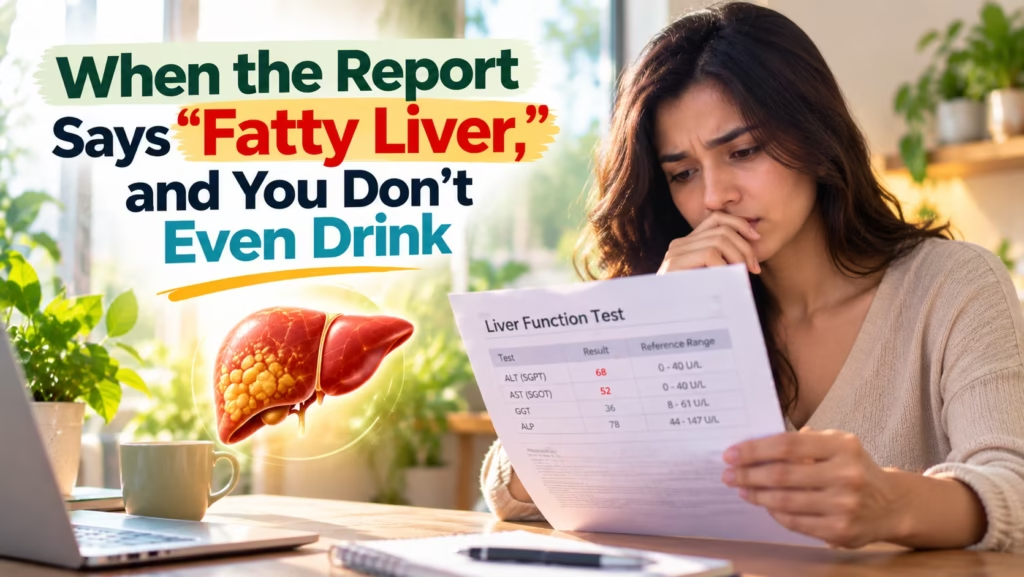
It starts with a simple question. Why do you look so low today?
And the answer catches you off guard: the report says fatty liver.
For a moment, it doesn’t even make sense. Fatty liver? Isn’t that something that happens to people who drink? That’s the first thought that hits — the assumption most of us carry around without ever questioning it. But the truth is far more common, and far more personal, than that.
Non-alcoholic fatty liver disease doesn’t ask whether you drink. It quietly builds up from the small choices repeated every single day — the ones that feel too ordinary to matter.
What Is Fatty Liver, Really?
Fatty liver happens when extra fat starts collecting in liver cells. A small amount of fat in the liver is normal. But when it builds up beyond a healthy limit, the liver has to work harder to do its job — filtering toxins, processing nutrients, and keeping metabolism running smoothly.
The non-alcoholic form, often called NAFLD, is one of the fastest-growing liver concerns today, and it’s showing up in people who have never touched alcohol in their life. That’s exactly why understanding fatty liver causes matters — because the real triggers are hiding in plain sight, in routines most people never think twice about.
The Real Fatty Liver Causes Hiding in Your Daily Routine
Here’s the part that hits closest to home. Fatty liver rarely comes from one big mistake. It comes from small habits, stacked up day after day, month after month.
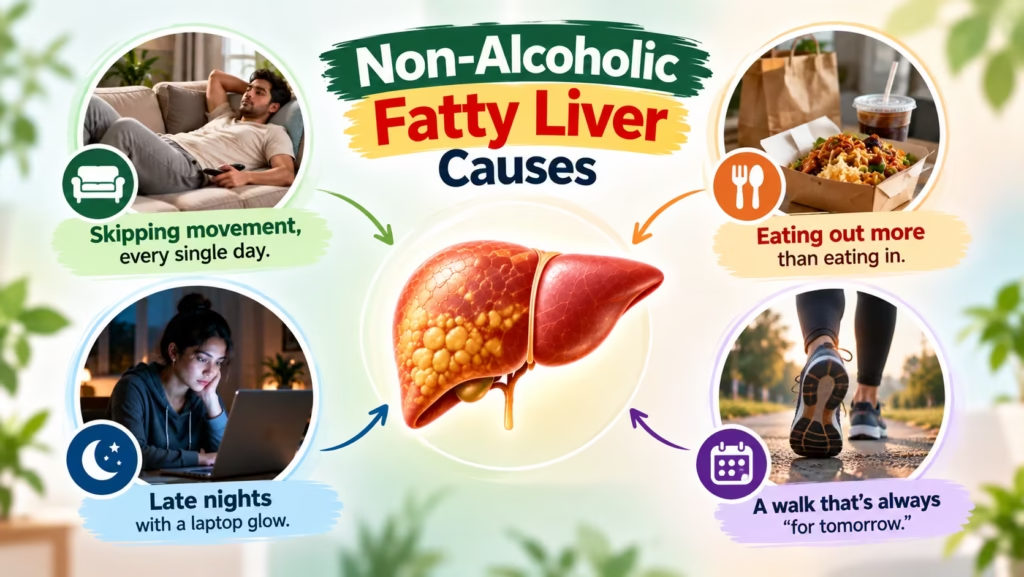
Skipping movement, every single day. The gym plan that keeps getting postponed. The walk that never happens because there’s “no time.” Movement helps the body use up fat instead of storing it — and when it’s missing consistently, the liver feels it.
Eating out more than eating in. Office lunches, late orders, weekend indulgences — outside food is often loaded with refined oils, sugar, and processed ingredients that the liver has to work overtime to process.
Late nights with a laptop glow. Working past midnight doesn’t just steal sleep. Poor sleep disrupts metabolism and insulin sensitivity, both of which are directly linked to fat buildup in the liver.
A walk that’s always “for tomorrow.” Sitting for long stretches at a desk, then coming home to sit some more, adds up to a body that rarely moves — and a liver that stores more fat than it should.
None of these habits look dangerous on their own. That’s exactly what makes them so easy to ignore.
Fatty Liver Symptoms You Might Be Brushing Off
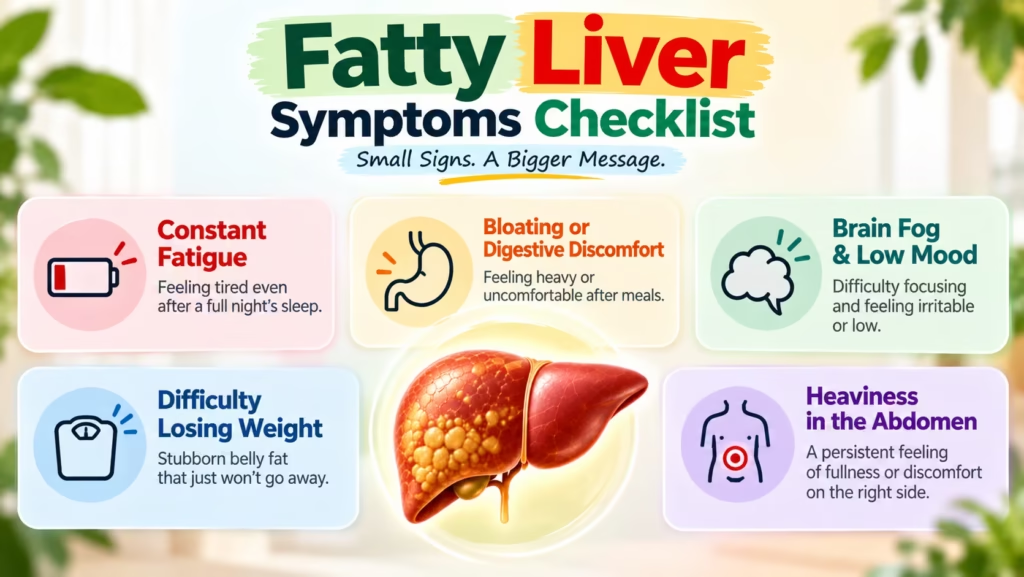
One of the trickiest things about fatty liver is how quiet it can be in its early stages. Many people don’t feel anything unusual until a routine blood test brings it to light. But there are signs worth paying attention to:
- Persistent tiredness or low energy, even after resting
- A dull, heavy feeling on the upper right side of the abdomen
- Mild digestive discomfort or bloating after meals
- Unexplained low mood or feeling “off” without a clear reason
- Difficulty losing weight despite normal effort
These fatty liver symptoms are easy to blame on stress, work pressure, or simply “just being tired.” That’s often why the condition goes unnoticed until a report puts it in black and white.
There Is No Magic Drink — And That’s Actually Good News
Here’s a truth worth sitting with: there is no single drink, tea, or shortcut that reverses fatty liver overnight. Anyone promising an instant fix is selling a story, not a solution.
But here’s the good news hiding inside that truth — a consistently healthy lifestyle genuinely can make a difference. Regular movement, better food choices, earlier nights, and simply showing up for your own health, one small decision at a time, is what actually supports liver wellness over time.
It’s not about a magic drink. It’s about a mindset shift — choosing your own care, even before a medicine does.
Small Shifts That Add Up

You don’t need to overhaul your entire life in one day. Real change usually starts small:
- Replace one outside meal a week with a home-cooked one
- Take a 20-minute walk after dinner instead of scrolling on the couch
- Set a “laptop closes by” time and actually stick to it
- Add one extra glass of water between meals
- Choose the stairs when you reasonably can
Each of these feels tiny. But tiny, repeated choices are exactly what shaped the problem in the first place — and they’re exactly what can help turn it around.
Sometimes, Care Comes Before the Medicine Does
There’s a quiet kind of courage in choosing to take care of yourself before a doctor tells you to. In noticing the report, feeling the moment of shock, and deciding to change the story from there.
If this sounds like someone you know — someone who always puts their health last on the list — this might be the nudge they need. Share it with them. Sometimes a report is not the end of the story. It’s the beginning of a better one.
Conclusion: Your Liver Deserves a Second Look

It can happen to anyone. Fatty liver isn’t reserved for a specific kind of person or lifestyle. It doesn’t only knock on the door of people who drink. It builds quietly — through skipped walks, rushed meals, and late nights that feel harmless in the moment. That’s the part worth remembering most: it’s not one big mistake, it’s many small ones, repeated without noticing.
Awareness is the real turning point. The moment you stop assuming “this won’t happen to me” is the moment things start to change. A report doesn’t have to feel like bad news. It can simply be the nudge that says — pay attention now, before it becomes something bigger.
Small, steady choices carry it forward. Nobody fixes a lifestyle in one day, and nobody needs to. One home-cooked meal instead of an order-in. One evening walk instead of one more episode. One earlier night with the laptop closed on time. These small choices, repeated daily, are what actually add up over weeks and months.
Where Fitness Veda fits in. At Fitness Veda, we believe liver wellness starts with understanding, not fear. We’re not here to sell a shortcut — we’re here to support the routine you’re already building.
Why Consider TUDCA+ Liver Support Alongside Your Daily Habits
The pain point: Walks get skipped. Home food gets replaced with outside food. Sleep keeps getting pushed later. Even with the best intentions, daily life makes it hard to give your liver everything it needs, every single day — and that gap is exactly where liver stress quietly builds up.
What TUDCA+ is formulated to do: TUDCA+ is formulated with Tauroursodeoxycholic Acid (TUDCA), a bile acid compound studied for its role in supporting healthy liver cell function and normal bile flow. It’s designed to work as a daily companion to your lifestyle — not a replacement for the walks, the home meals, or the early nights, but support that fills in on the days those habits fall short.
The profit — what you actually gain by pairing habit change with daily support:
- Consistency, even on hard days. On days the walk doesn’t happen or the office lunch wins, daily supplement support helps you stay consistent with caring for your liver.
- A habit that reinforces itself. Taking a daily supplement alongside a lifestyle change becomes its own reminder — it’s easier to stick to an evening walk when you’re already building a “liver-care” routine around it.
- Peace of mind, not pressure. You’re no longer relying on willpower alone. You’re building a system — habits plus support — that works together instead of leaving everything to chance.
- A long-term approach, not a quick fix. There’s still no magic drink. But there is a formulated, daily companion that fits naturally into the lifestyle changes you’re already making.
👉 Ready to pair your new habits with daily liver support?