

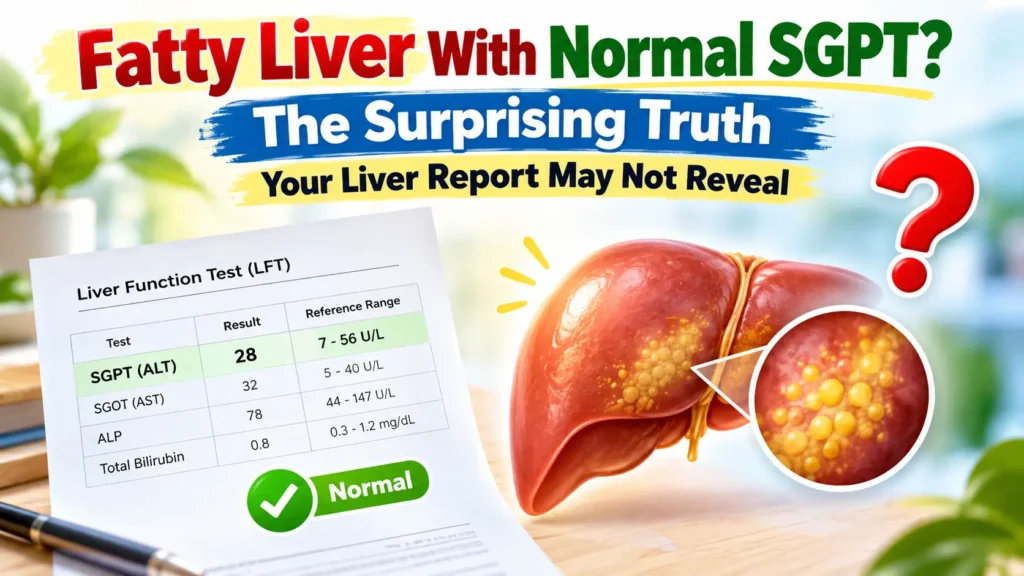
Fatty Liver With Normal SGPT? The Surprising Truth Your Liver Report May Not Reveal
Introduction
Your SGPT report says “Normal.” You feel relieved. You think your liver is safe.
But here’s the truth nobody tells you: a normal SGPT does not always mean a healthy liver.
Thousands of people walk out of the lab with a perfect report, yet quietly carry early fatty liver inside them. This is not here to scare you. This is simple liver science, explained in easy words, so you can protect yourself before small damage turns into big trouble.
Let’s break it down, one simple truth at a time.
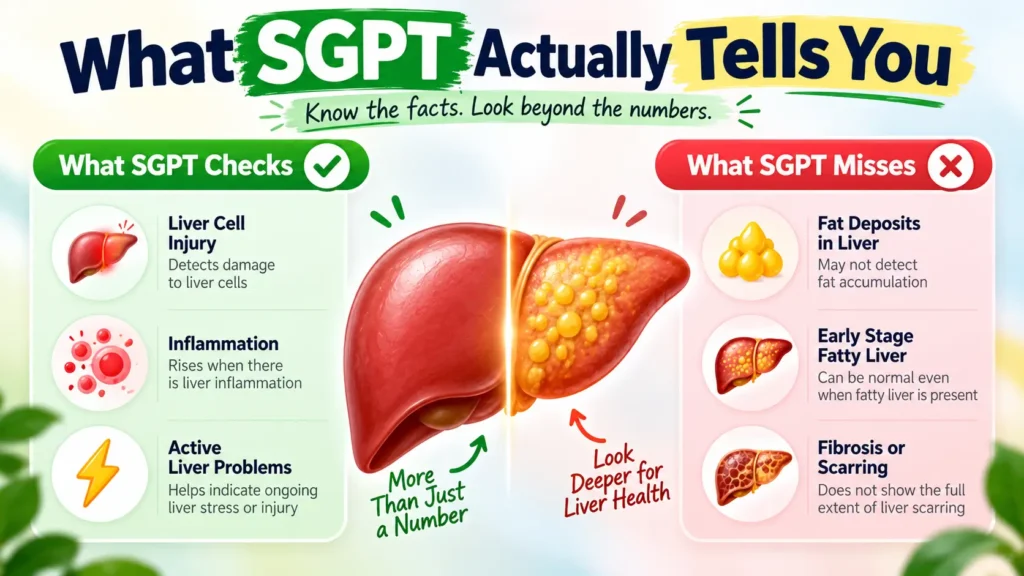
SGPT (also called ALT) is a liver enzyme test. Doctors use it to check for liver cell injury or inflammation.
When liver cells get damaged, SGPT rises. When liver cells are stable, SGPT stays normal.
Simple, right? But here’s the catch — SGPT only reacts to active injury or inflammation. It was never designed to measure fat.
So if your liver has started collecting fat, but the cells are not yet inflamed, your SGPT can sit comfortably in the “normal” range. Meanwhile, the fat keeps building up silently.
The Silent Gap: Early Fatty Liver With Normal SGPT
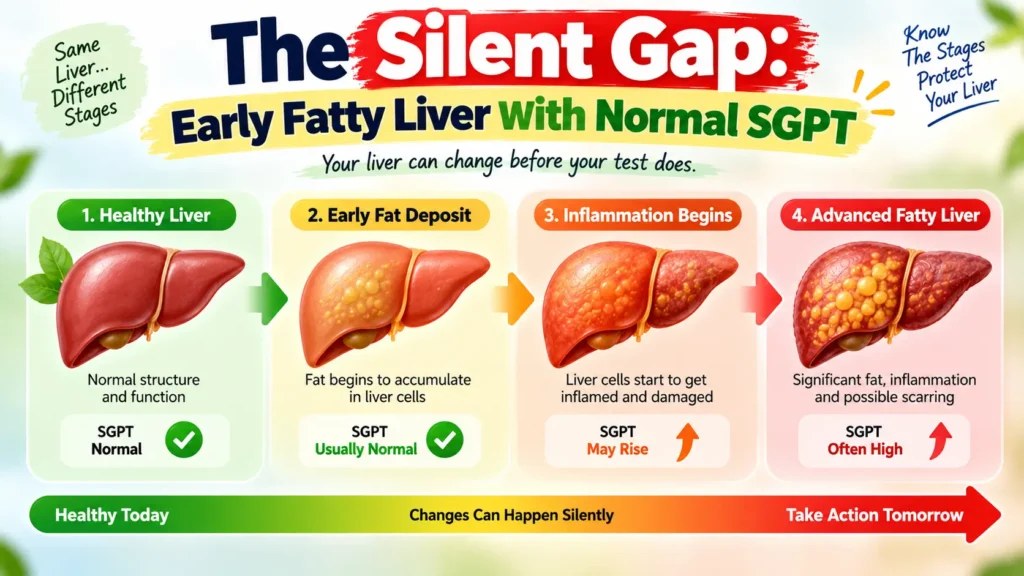
This is the part that surprises most people.
Early stage fatty liver (Grade 1) often has no symptoms and no enzyme spike. The fat is present, sitting quietly in liver cells, but it has not yet triggered enough inflammation to push SGPT above normal levels.
This is why so many people are shocked when an ultrasound reveals fatty liver, even though their blood report looked perfectly fine just months earlier.
Your liver is a patient organ. It absorbs stress silently for years before it finally raises an alarm through blood tests. By the time SGPT rises, the damage may already be more advanced.
Who Should Be Extra Careful
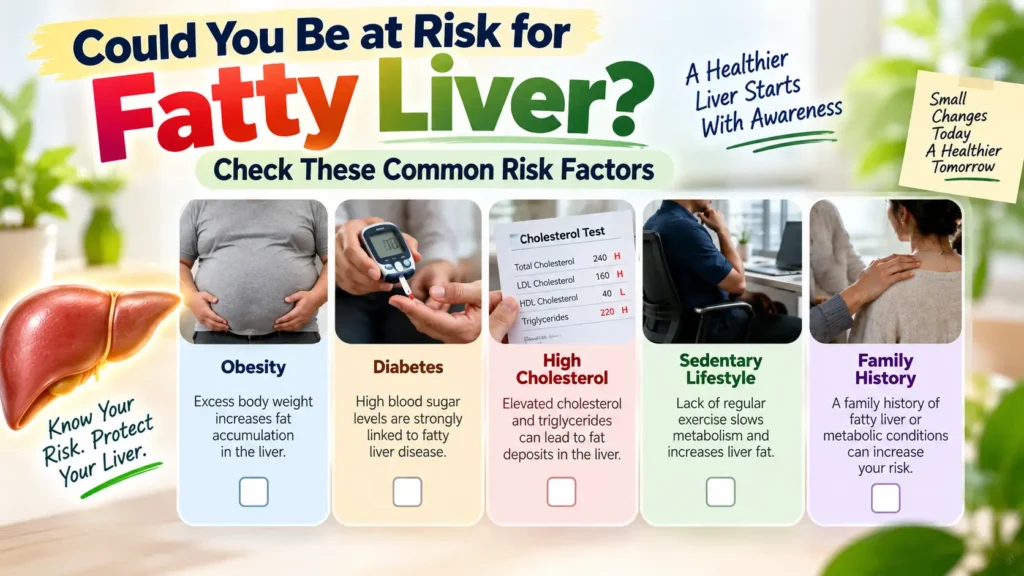
Even with a normal SGPT report, some people carry a higher risk of hidden fatty liver:
- People with obesity or excess belly fat
- People with diabetes or high blood sugar
- People with high cholesterol or triglycerides
- People with a sedentary lifestyle and low physical activity
- People with a family history of fatty liver or diabetes
If you fall into any of these categories, a normal SGPT is not a green flag to relax. It simply means one test came back clear — not that your liver is guaranteed safe.
What Your Doctor May Recommend Next
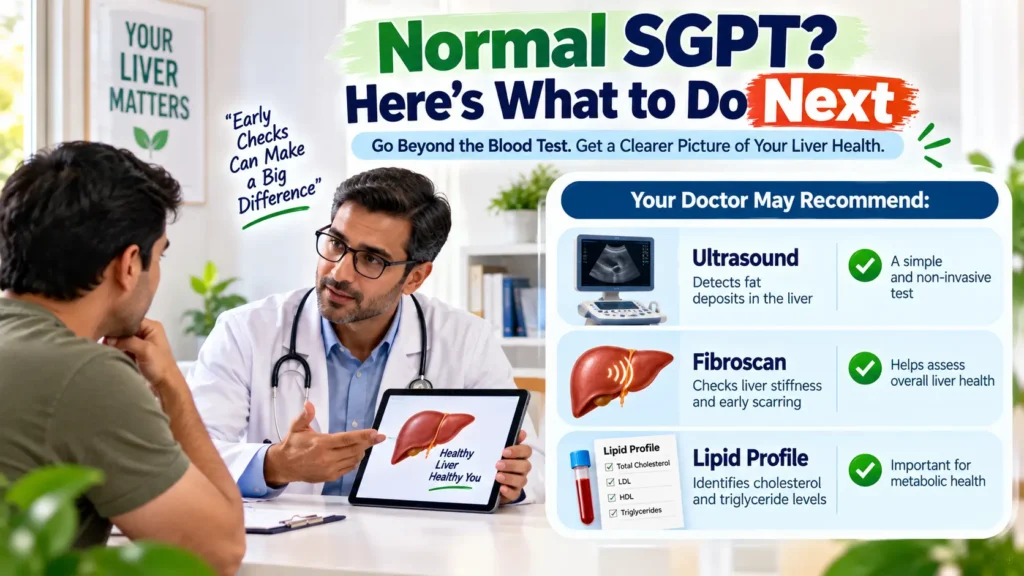
The Bigger Lesson: Don’t Let One Normal Report Create False Comfort
Health reports are tools, not guarantees. A normal SGPT is good news — but it is not the final word on liver health.
Your liver works silently, absorbing years of stress from poor diet, inactivity, and metabolic imbalance, long before any test shows a red flag. That’s exactly why awareness matters more than a single number on a report.
Listening to your body, understanding your risk factors, and asking the right questions during your next checkup — that’s what real liver care looks like.
Conclusion: Take Charge Before Symptoms Take Over
Your liver never demands attention loudly. It whispers, through subtle signs, quiet fatigue, and reports that look “fine” on the surface. The real power lies in understanding what your reports do and don’t tell you.
Don’t wait for SGPT to rise before you act. Awareness today can protect your liver for decades to come. Your liver has been working for you every single day — isn’t it time you worked for it too?
Your liver works for you every single day — quietly, non-stop, without a single day off. Isn’t it time you gave something back?
If you’re ready to support your liver the smart way, meet Liver Detox from Fitness Veda. It’s formulated to support healthy bile acid balance and natural oxidative function — helping your liver do what it does best, more efficiently.
Whether you’re managing risk factors like high cholesterol, sluggish digestion, or simply want to build a stronger liver-care routine, Liver Detox is designed to be your daily ally.
👉 Explore Liver Detox now and give your liver the support it deserves: