
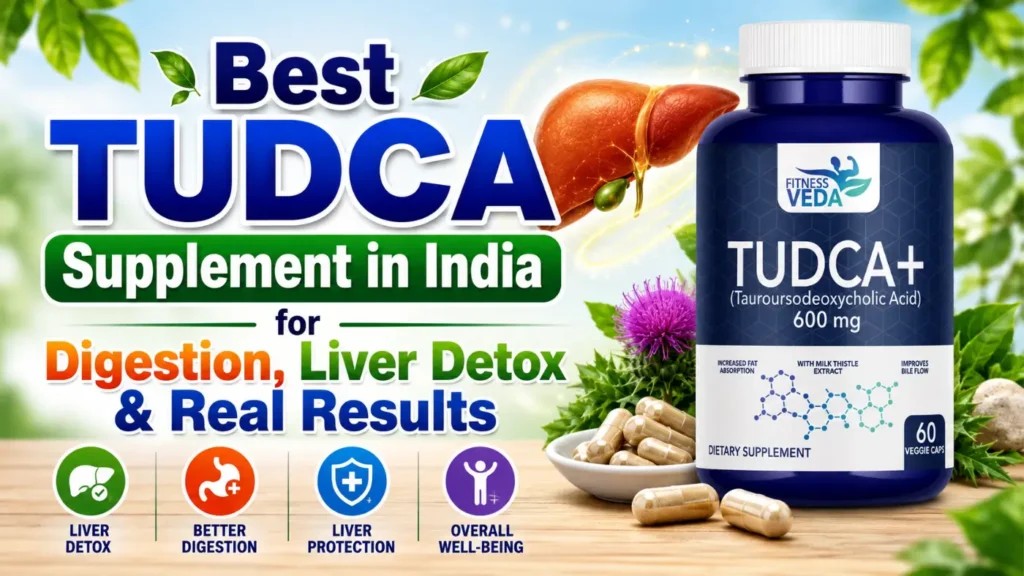
Best TUDCA Supplement in India for Digestion, Liver Detox & Real Results
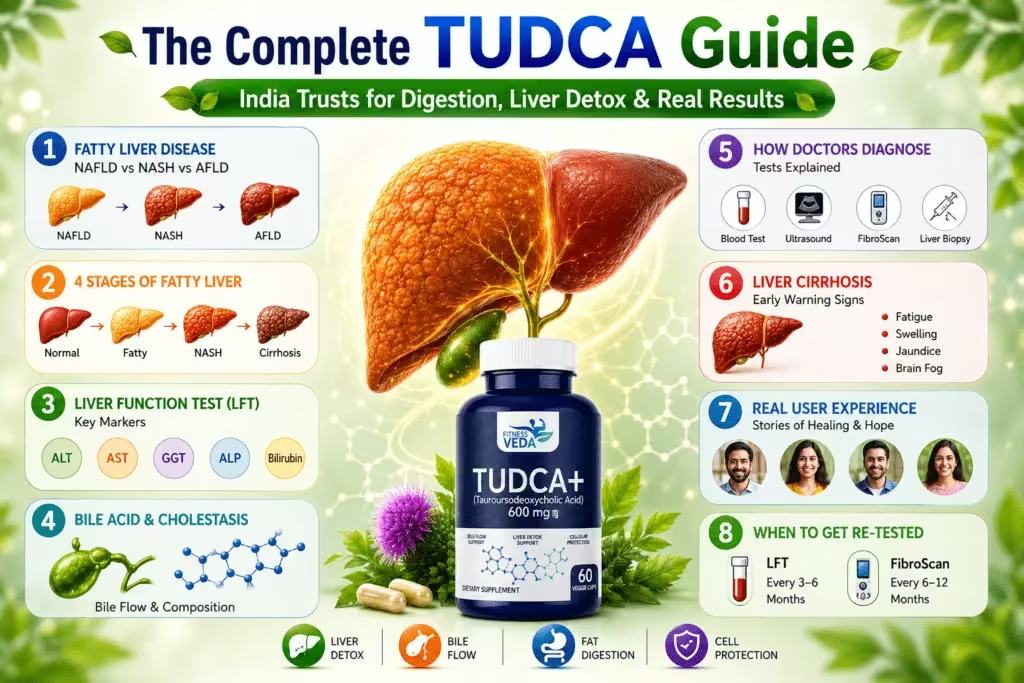
A Complete Guide to Supporting Liver Health Naturally in 2026
Your liver works 24×7 — filtering toxins, processing fat, and keeping your digestion smooth. But thanks to today’s lifestyle — junk food, alcohol, pollution, stress, and late-night routines — your liver often takes a silent beating. That’s where TUDCA steps in.
If you’ve been searching for the best TUDCA supplement in India , you’ve probably noticed dozens of brands claiming to be “the best.” This guide cuts through the noise. We’ll break down what TUDCA actually is, the science behind it, how it works inside your body, its real benefits, and how Fitness Veda TUDCA+ stands out from the crowd with a clean, effective, and India-friendly formula.
By the end of this article, you’ll know exactly why TUDCA deserves a place in your daily wellness routine — and how to choose a supplement that’s actually worth your money.
Table of Contents
1 Introduction — What Is TUDCA+ (600mg)?
2. What Is TUDCA? (Tauroursodeoxycholic Acid Explained)
3. Understanding Fatty Liver Disease (NAFLD vs NASH vs AFLD)
4. The 4 Stages of Fatty Liver
5. Liver Function Test (LFT) — Key Markers Explained
6. How Doctors Diagnose Liver Problems — Tests Explained
7. Bile Acid Composition & Cholestasis — TUDCA’s Direct Mechanism
8. Gallbladder–Liver Connection
9. How Does TUDCA+ Work? (Mechanism of Action)
10. The Science Behind TUDCA+ — Clinical Research Summary
11. Key Ingredients Breakdown
12. Benefits of TUDCA+ for Liver Health
13. How TUDCA+ Supports Specific Body Functions
14. TUDCA and Fatty Liver Reversal — What the Research Says
15. Who Should Use TUDCA+?
16. Who Should Avoid It / Consult a Doctor First
17. Recommended Dosage
18. Best Time to Take TUDCA+
19. Can You Take TUDCA+ With Other Liver Supplements?
20. Potential Side Effects
21. Liver Cirrhosis — Early Warning Signs
22. Liver Detox Myths vs Science
23. Frequently Asked Questions
24. TUDCA+ vs Competitor Liver Supplements
25. What Makes Fitness Veda Different?
26. Real User Experience
27. Lifestyle Tips to Maximize Liver Recovery
28. Common Mistakes People Make
29. When to Get Re-Tested (LFT / FibroScan Follow-Up)
30. Expert Insights & Recommendations
31. Clinical & Scientific References
32. Medical Disclaimer
33. Suggested Internal & External Linking Map
34. Conclusion — Your Liver Deserves This Kind of Attention
1. Introduction — What Is TUDCA+ (600mg)?
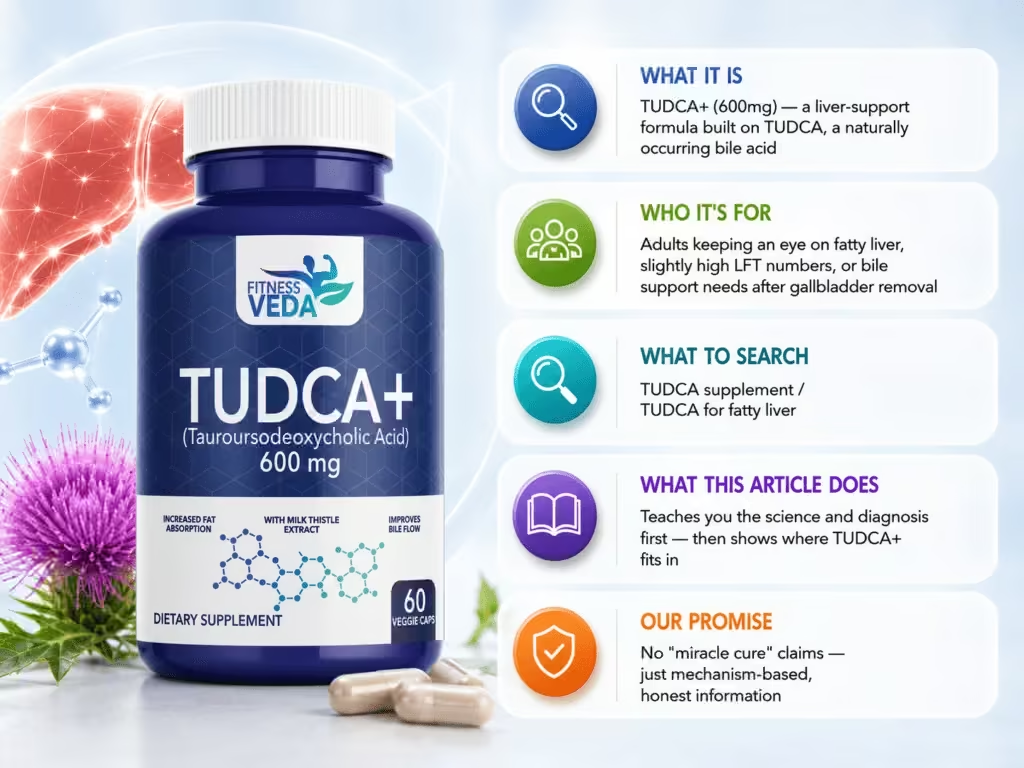
Everything you need to know about TUDCA+ 600 mg—what it is, who it’s for, and how it supports liver health.
Your liver does a lot of quiet, unglamorous work — filtering out toxins, managing bile, and processing everything you eat and drink. TUDCA+ (600mg) is Fitness Veda’s liver-support formula, built around a naturally occurring bile acid called TUDCA (Tauroursodeoxycholic Acid).
Researchers have studied TUDCA for its role in three things: keeping bile flowing smoothly, easing stress inside liver cells, and protecting the tiny “power plants” inside those cells (called mitochondria) when the body is under metabolic strain.
This article is your complete guide to liver health — we’ll walk through how fatty liver develops, how doctors actually test for it, where TUDCA fits into your liver’s biology, and how TUDCA+ was designed around that science.
2. What Is TUDCA? (Tauroursodeoxycholic Acid Explained)
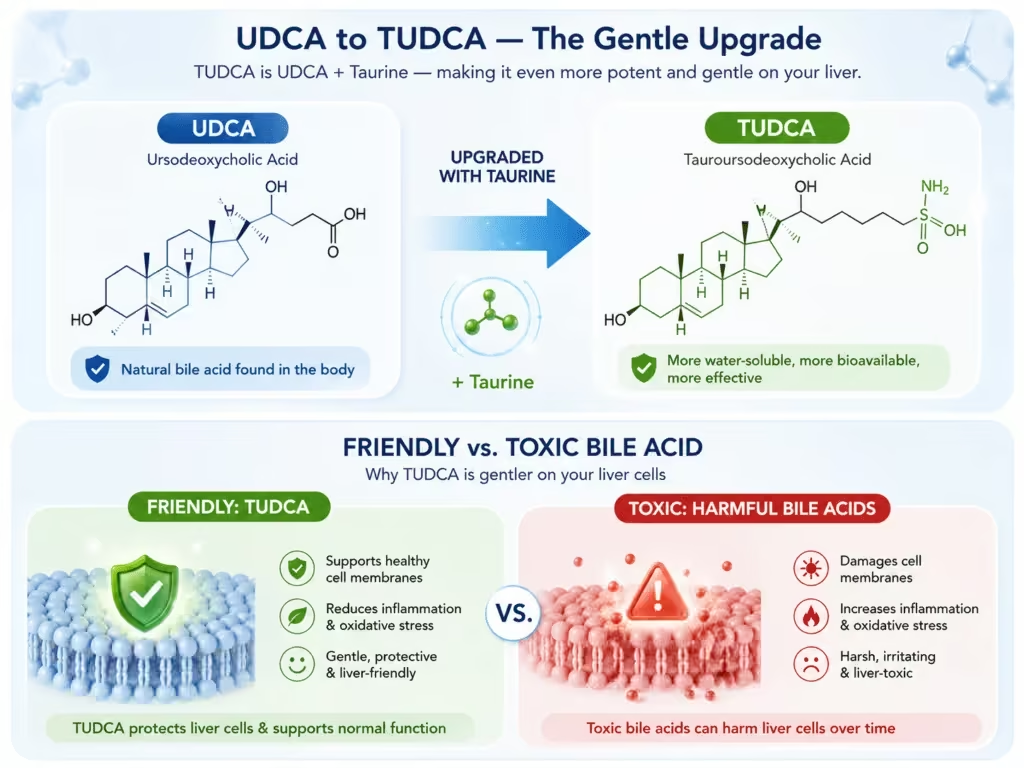
See how TUDCA differs from UDCA and why its gentler bile acid profile may help support healthy liver cells.
Let’s break down that long name — Tauroursodeoxycholic Acid, or TUDCA for short. It’s simply the taurine-attached version of another bile acid called UDCA (Ursodeoxycholic Acid), which your body already makes in small amounts.
Here’s why that matters: when bile flow gets sluggish, some bile acids turn toxic and irritate liver cells. TUDCA is different — it’s often called a “friendly” bile acid because it’s gentler on those cell membranes, and it has a well-studied way of calming stress inside the cell (we’ll dig into exactly how in Section 9).
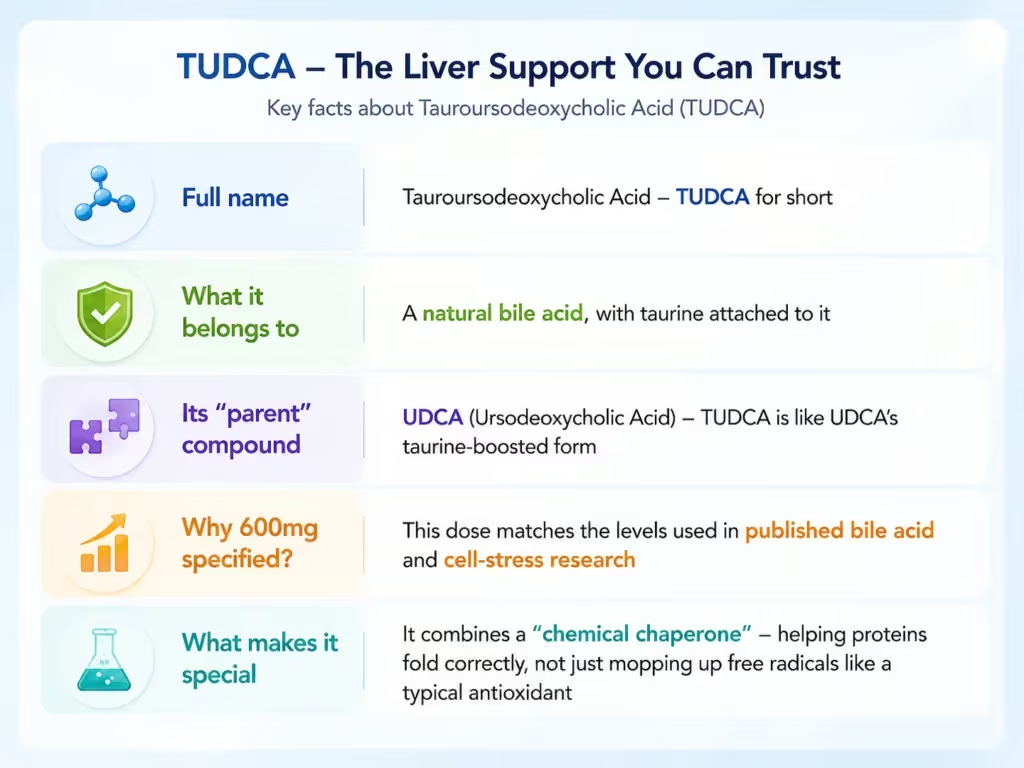
Unlock the truth about TUDCA—see why its unique structure and 600 mg dose make it stand out for liver support.
3. Understanding Fatty Liver Disease (NAFLD vs NASH vs AFLD)
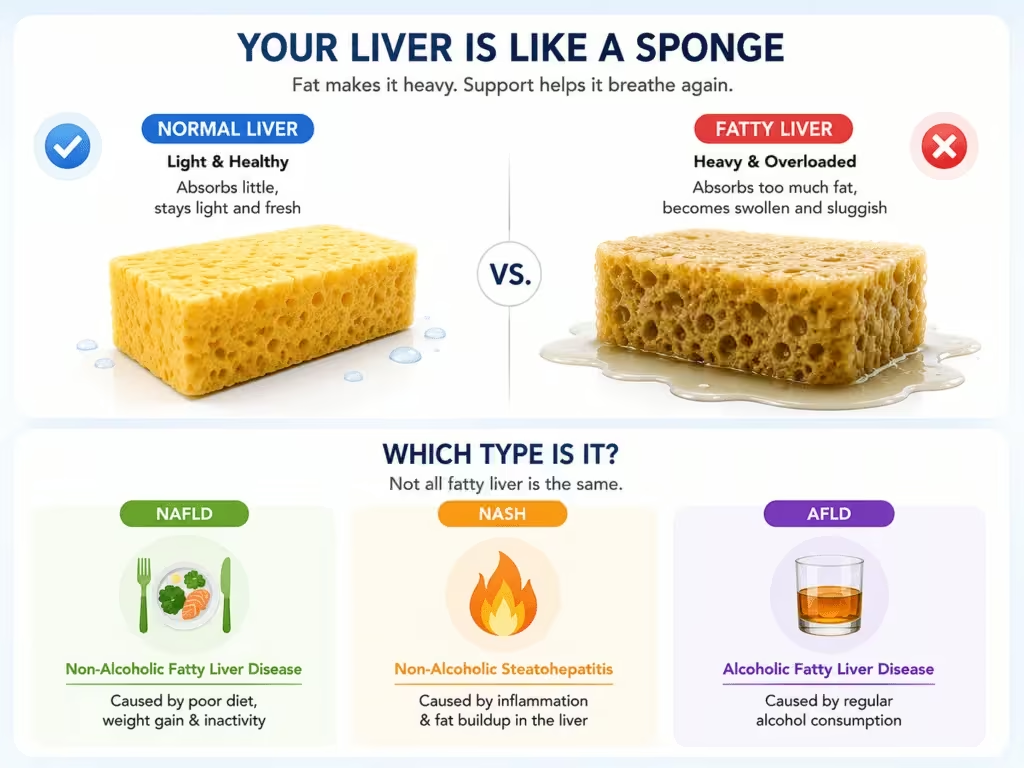
Stop the confusion—learn the 3 types of fatty liver and see why early action can make a big difference.
Picture your liver as a sponge sitting inside your body. A healthy sponge holds a small, normal amount of fat and does its job without complaint. But when that sponge starts soaking up more fat than it should — past the 5-10% mark of the liver’s total weight — it swells up, gets sluggish, and slows down its normal filtering work.
This is what doctors call fatty liver disease. But here’s the part most people don’t realize: “fatty liver” isn’t just one condition — it actually splits into three different types, depending on what’s causing the fat buildup.
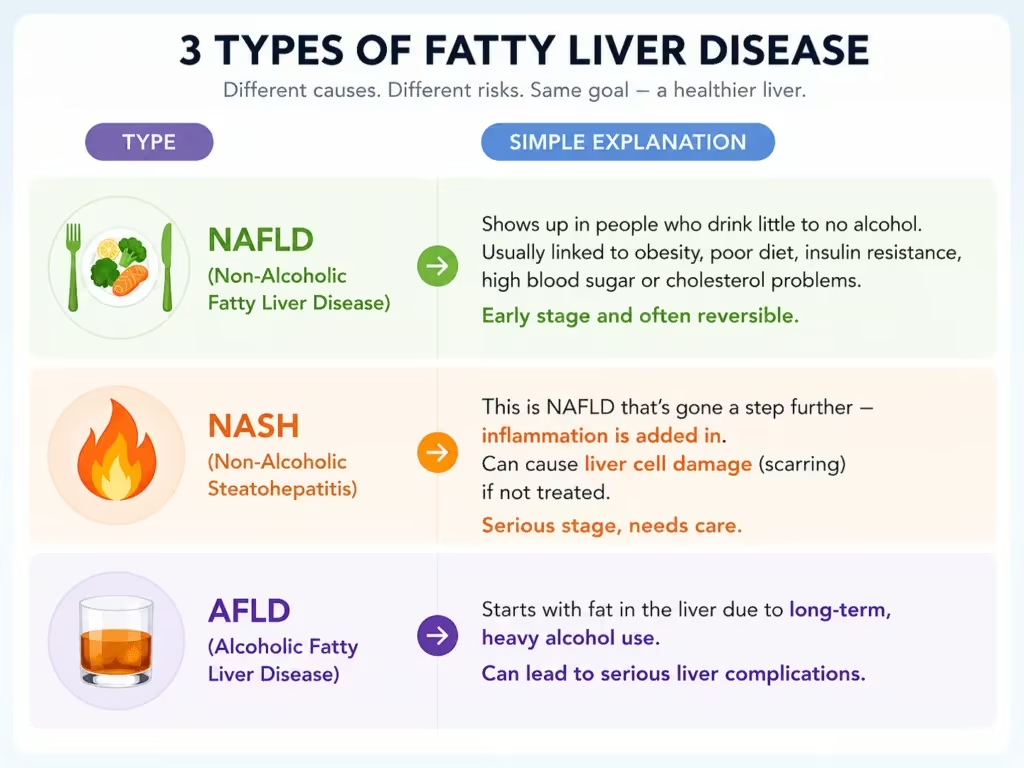
Know the difference between NAFLD, NASH, and AFLD—understanding the right type is the first step to better liver health.
4. The 4 Stages of Fatty Liver
Fatty liver disease doesn’t happen overnight — it moves through four stages, step by step. And here’s the good news first: the earlier you catch it, the more the outlook changes in your favor.
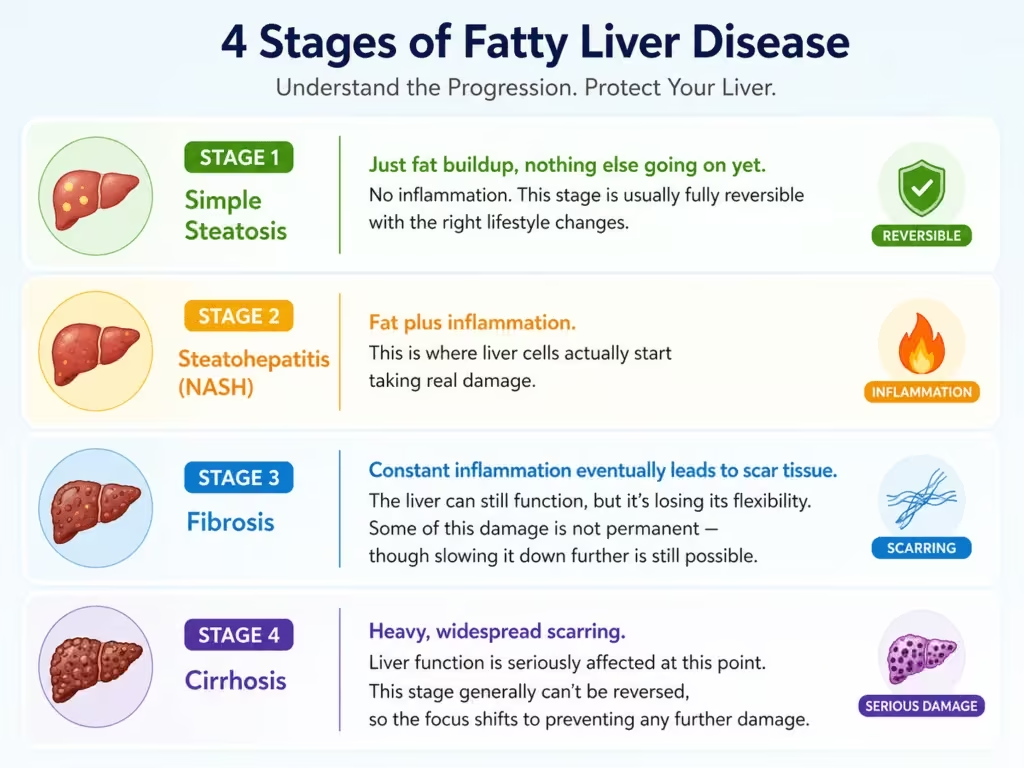
Take control today—learn the 4 stages of fatty liver before small changes become serious damage.
So why does this staircase matter to you? Because it explains exactly why catching fatty liver early — and supporting your liver at the cellular level — makes such a big difference.
This is where TUDCA’s role becomes relevant: research has looked at how it may help reduce ER stress (covered in detail in Section 9), which is one of the underlying triggers that pushes simple fatty liver toward the more serious NASH stage.
5. Liver Function Test (LFT) — Key Markers Explained
Ever stared at your LFT report and seen a word like “High” next to some confusing abbreviation, with no idea what it actually means? You’re not alone — most people never get a plain-English explanation of what these markers are really measuring. Let’s fix that, one marker at a time.
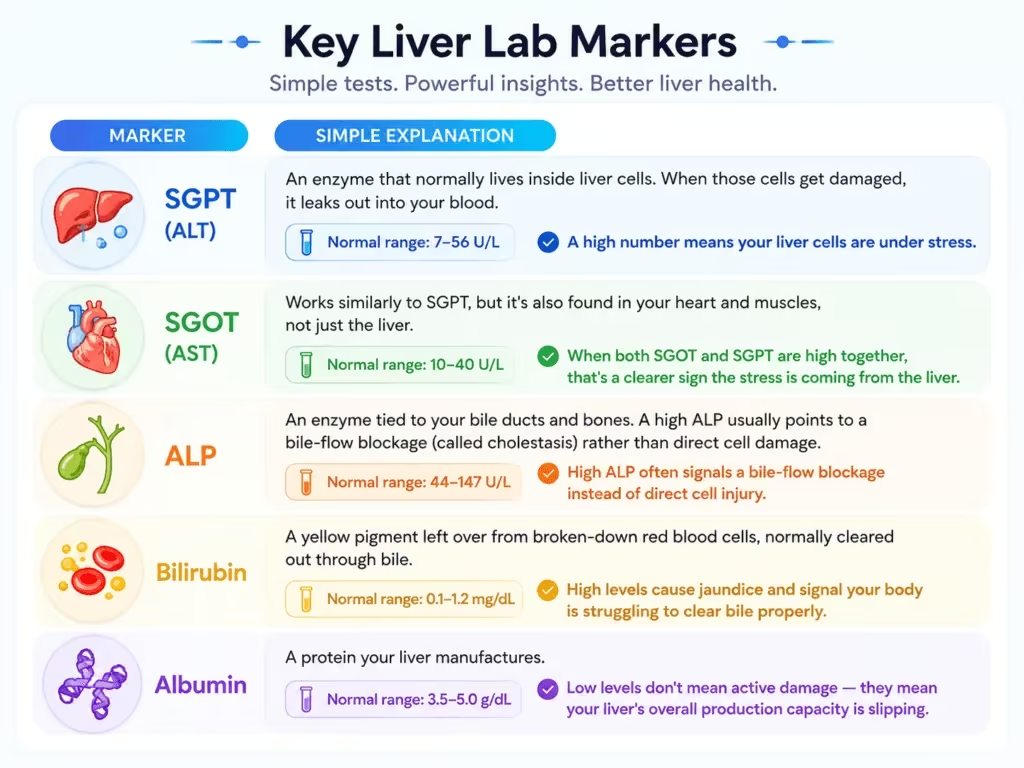
Master your liver test results—learn what these key blood markers reveal about your liver health.
Here’s the big-picture takeaway: SGPT and SGOT tell you about cell damage. ALP and Bilirubin tell you about bile-flow problems. Albumin tells you about your liver’s overall output. No single number tells the whole story — you need to look at all five together to get the real picture.
6. How Doctors Diagnose Liver Problems — Tests Explained
Blood tests are just the starting point. When doctors need a clearer picture, they reach for four more tools — FibroScan, ultrasound, CAP score, and, in trickier cases, a biopsy. Here’s what each one actually does, explained without the jargon.
6.1 FibroScan / Transient Elastography
Think of this test like tapping a watermelon to check if it’s ripe — except instead of sound, a FibroScan sends a tiny vibration through your liver and measures how fast it travels. The faster it moves, the stiffer (and more scarred) your liver tissue is.
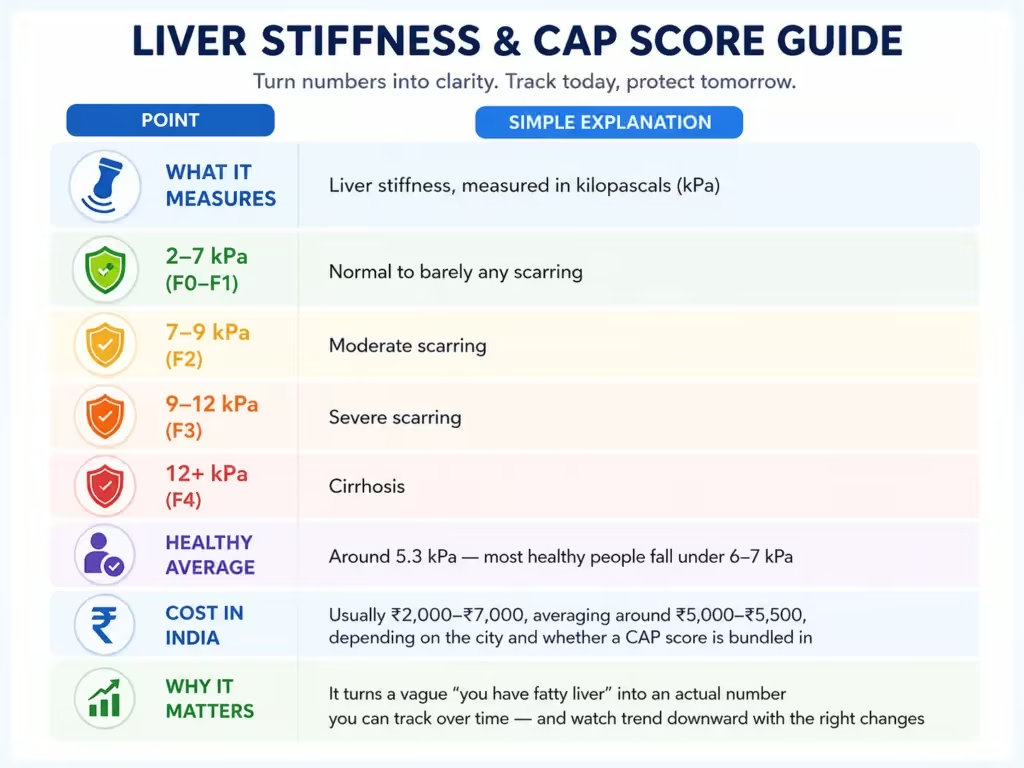
Unlock your FibroScan score—see what each liver stiffness stage means for your liver health.
6.2 Liver Ultrasound / USG Abdomen — Grading Fatty Liver
An ultrasound works like sonar for your body — it bounces sound waves off your organs to build a picture of what’s inside. Here’s the interesting part: fat doesn’t reflect those sound waves the same way healthy liver tissue does. So when fat builds up, your liver actually looks brighter on the screen. Doctors call this “echogenic,” and the brighter it gets, the more fat is likely present.
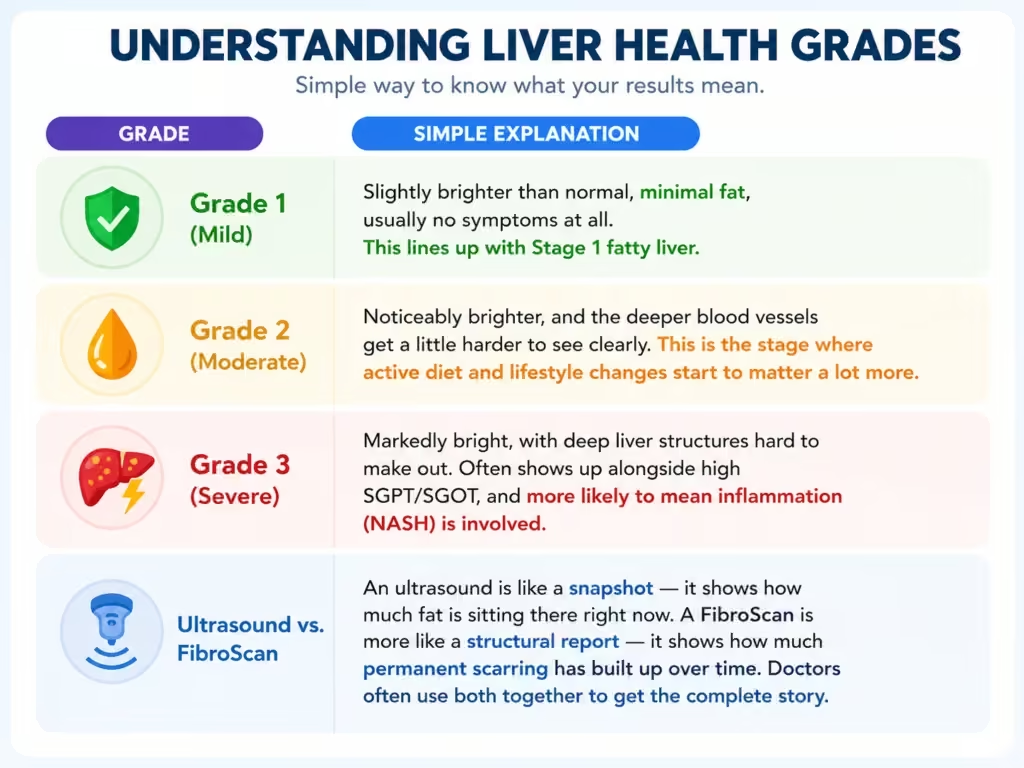
Understand your ultrasound results—see what each liver grade reveals and why it matters for your health.
6.3 CAP Score (Controlled Attenuation Parameter)
Here’s a number worth asking your doctor about: the CAP score. It’s generated by the same FibroScan machine, but instead of measuring stiffness, it gives you an exact percentage of how much fat is actually sitting in your liver — a level of precision a regular ultrasound grade simply can’t match.
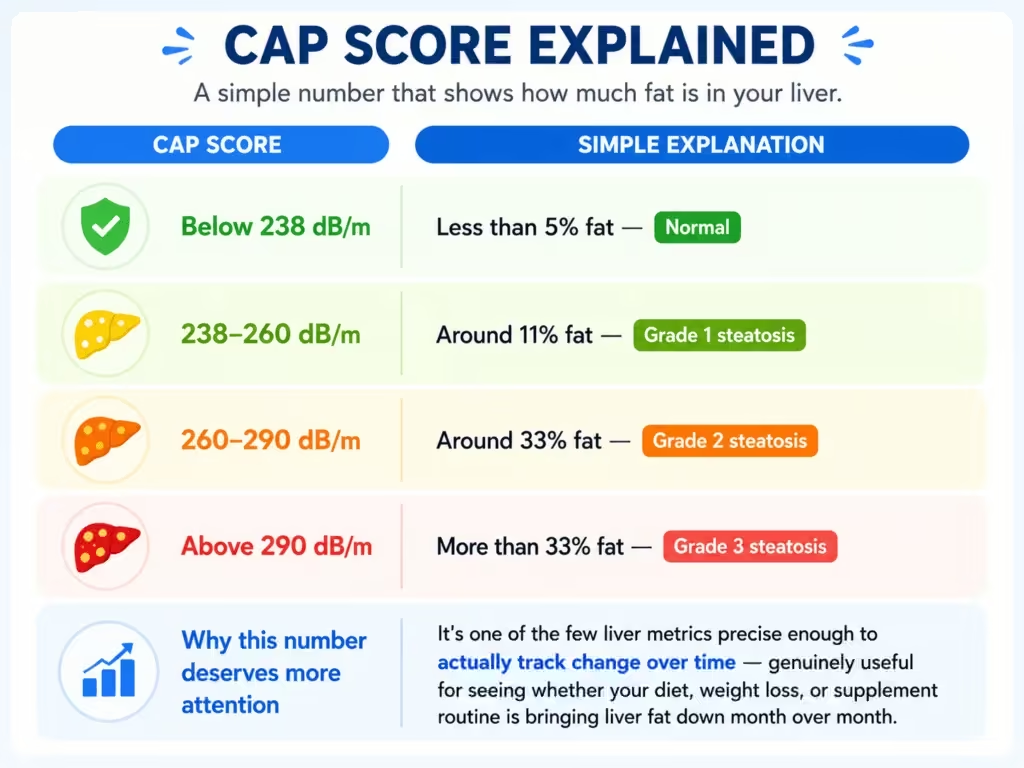
Decode your CAP score—see what your liver fat level means and track your progress with confidence.
6.4 Liver Biopsy
A biopsy is the most thorough liver test that exists — a thin needle removes a tiny tissue sample, which is then examined directly under a microscope. But “most thorough” doesn’t mean “first choice.” Because it’s invasive, doctors treat it as a last resort, not a starting point.
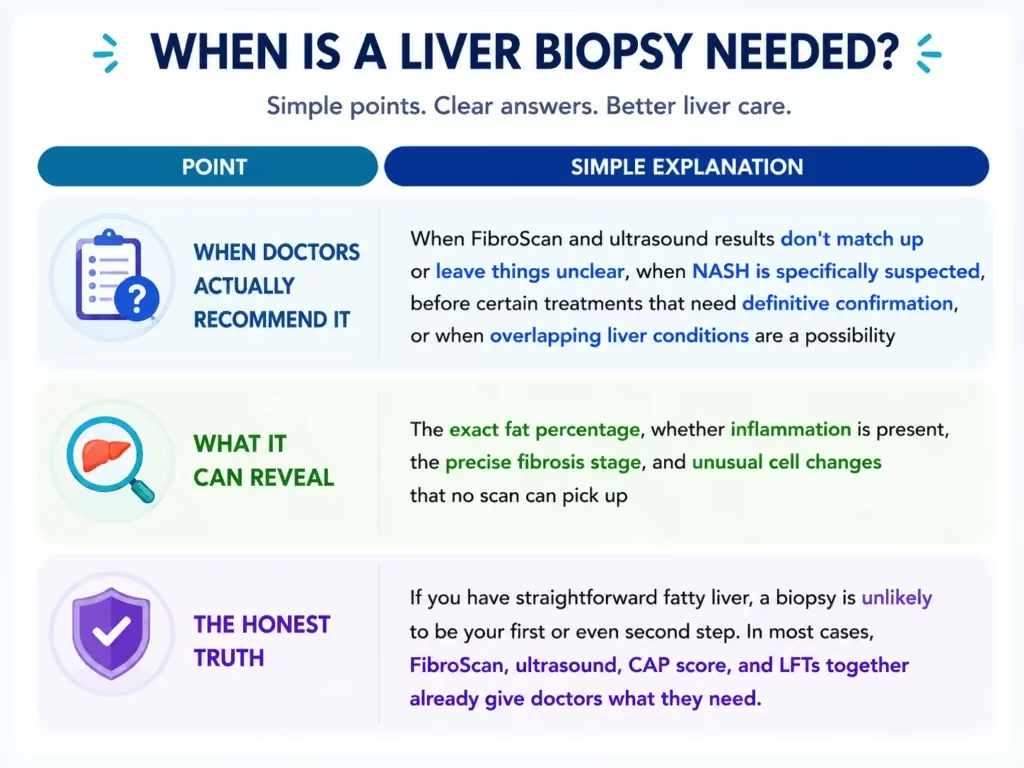
Get the facts—learn when a liver biopsy is truly needed and what it can reveal about your liver.
7. Bile Acid Composition & Cholestasis — TUDCA’s Direct Mechanism
This is the section that finally answers the big question: why does TUDCA exist as a supplement in the first place? To understand that, you need to know what bile acids actually do. Your liver makes them from cholesterol, and they work a lot like a detergent — breaking down fat from your food in the intestines, and helping flush out waste and excess cholesterol along the way.
But detergents have a downside — in the wrong amount, in the wrong place, they can damage the very thing they’re meant to clean. That’s exactly what happens when something called cholestasis kicks in, and it sets off a chain reaction worth understanding.
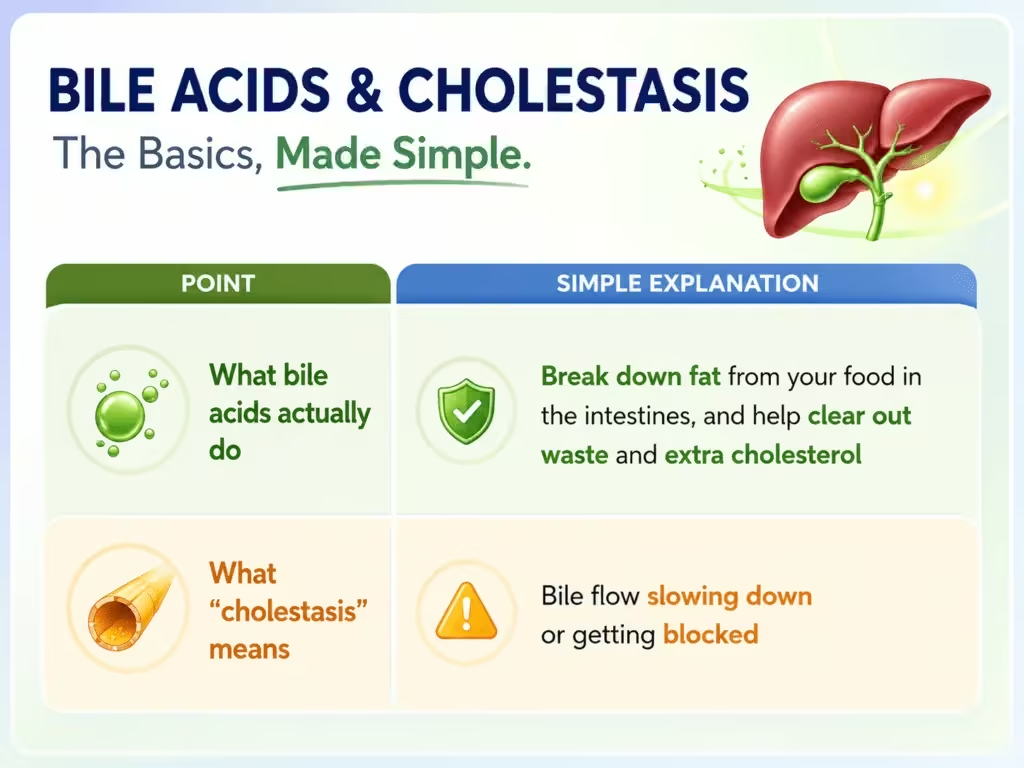
Boost your liver knowledge—learn how bile acids work and why healthy bile flow matters.
Here’s how the vicious cycle unfolds, step by step:
1. Bile flow slows down — this is cholestasis kicking in.
2. Toxic bile acids start building up inside liver cells — remember, these “detergent” molecules are helpful in normal amounts, but become toxic to the cells themselves when they pile up.
3. That buildup damages liver cells and triggers something called ER stress — think of it as an internal “panic mode” where the cell can no longer process proteins properly.
4. ER stress causes even more cell damage and inflammation, which slows bile flow down even further — and the entire cycle starts over again.
7.1 Where TUDCA Steps In
Here’s the twist in the story: TUDCA is also a naturally occurring bile acid — the same category as the toxic ones causing all the damage in the cycle we just covered. But it behaves completely differently. TUDCA is considered a “friendly” bile acid, and researchers have studied it for three specific jobs it does inside the liver.
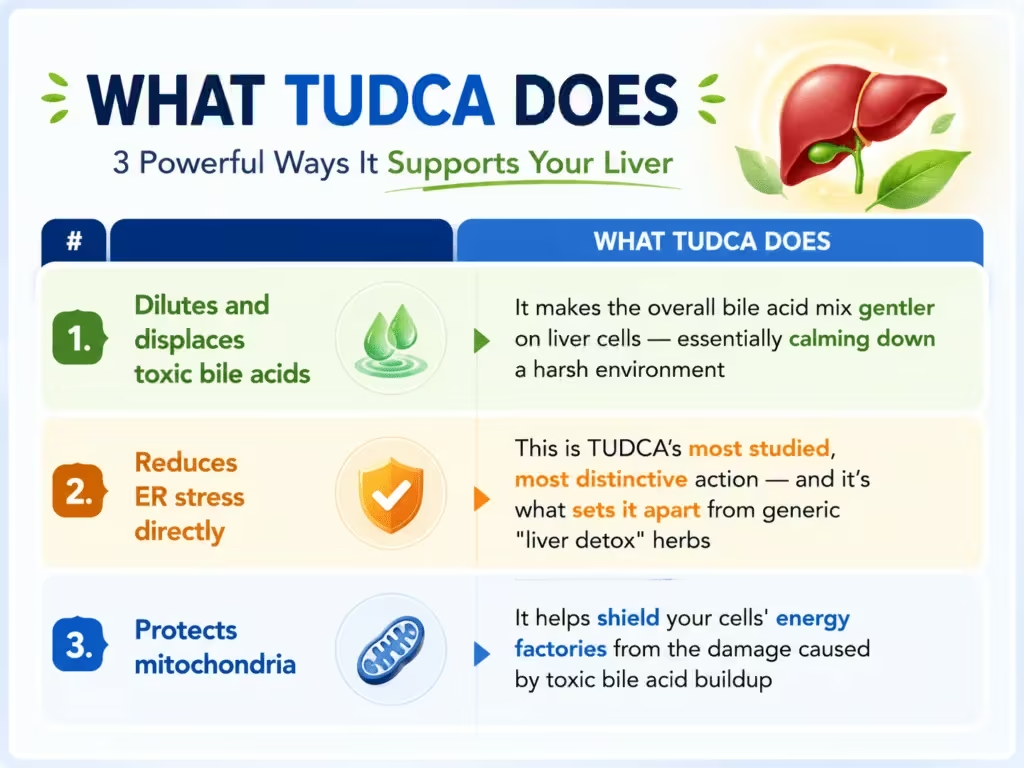
Unlock how TUDCA works—see the 3 powerful ways it helps protect and support your liver.
So here’s why this matters: this is the exact scientific reason TUDCA is positioned differently from turmeric- or milk-thistle-based liver formulas. It doesn’t just offer general antioxidant support from the outside — it works directly at the bile acid level and the cellular stress level, right where the damage in that vicious cycle actually happens.
8. Gallbladder–Liver Connection
Your liver and gallbladder aren’t two separate organs doing unrelated jobs — they’re a team, sharing the same plumbing system. The liver makes bile, and the gallbladder’s job is to store it, concentrate it, and release it in a burst exactly when you eat something fatty. Simple division of labor — until one of them is removed.
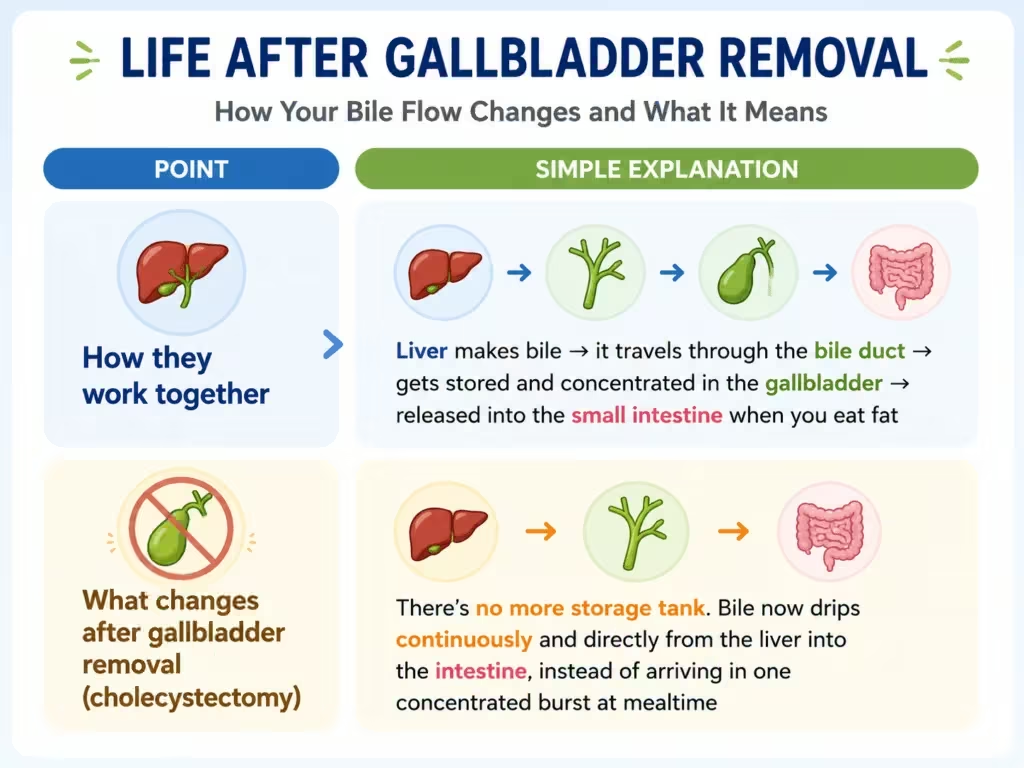
See what changes after gallbladder removal and learn how bile keeps supporting healthy digestion.
Here’s what that shift actually means in everyday life:
a. Fat digestion becomes less efficient — especially with large or very fatty meals, since there’s no concentrated bile burst ready to handle it.
b. Bile flow regulation becomes looser, which can occasionally show up as mild bloating or digestive discomfort after fatty foods.
c. The liver has to work harder to manage bile acid balance continuously, since the buffering, storage role the gallbladder used to play is simply gone.
So why bring this up in an article about TUDCA? Because if you’ve had your gallbladder removed, you’re living with a bile system that’s lost its original buffer tank — which makes bile-acid support directly relevant to you, tying straight back to TUDCA’s mechanism from Section 7.
9. How Does TUDCA+ Work? (Mechanism of Action)
This is arguably the most important section in the entire article — it’s where we answer the question a skeptical reader is probably already asking: “Okay, but how is this actually different from turmeric or milk thistle?” The honest answer is that most herbal liver ingredients work through one general pathway — antioxidant activity. TUDCA works through two specific, well-documented mechanisms happening right at the cellular level.
Mechanism 1: ER Stress Reduction
Inside every liver cell, there’s a structure called the Endoplasmic Reticulum (ER) — its job is to fold proteins into exactly the right shape. Under stress — from toxins, fat buildup, or the toxic bile acid pileup we covered in Section 7 — proteins start misfolding and piling up like a jammed assembly line. Scientists call this “ER stress,” and it’s a central driver behind liver cell damage and the slide from NAFLD into NASH. TUDCA has been well-documented as a chemical chaperone — meaning it physically helps proteins fold back into shape, directly relieving that pileup at the source.
Mechanism 2: Mitochondrial Protection
Mitochondria are your cells’ energy factories, working around the clock. When toxic bile acids or excess fat pile up, they can damage these factories badly enough to trigger premature cell death, called apoptosis. Research points to TUDCA helping stabilize the mitochondrial membrane, which reduces this early death signal and gives liver cells a better chance of surviving metabolic stress instead of shutting down prematurely.
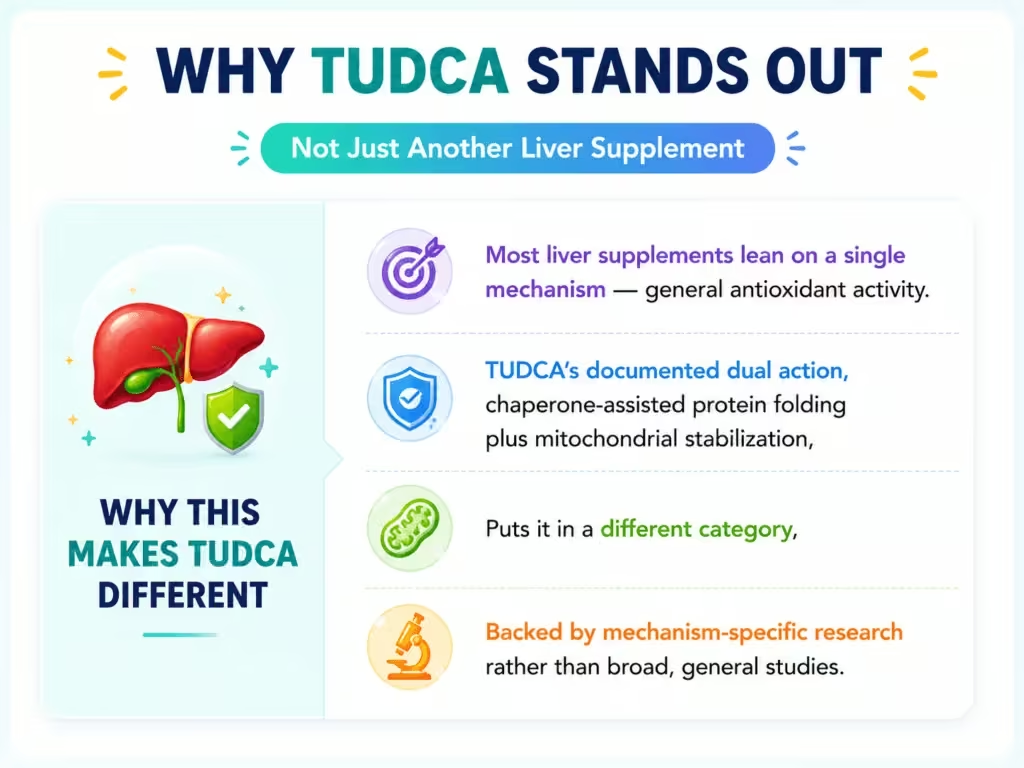
See why TUDCA stands apart with its powerful dual action for smarter liver support.
10. The Science Behind TUDCA+ — Clinical Research Summary
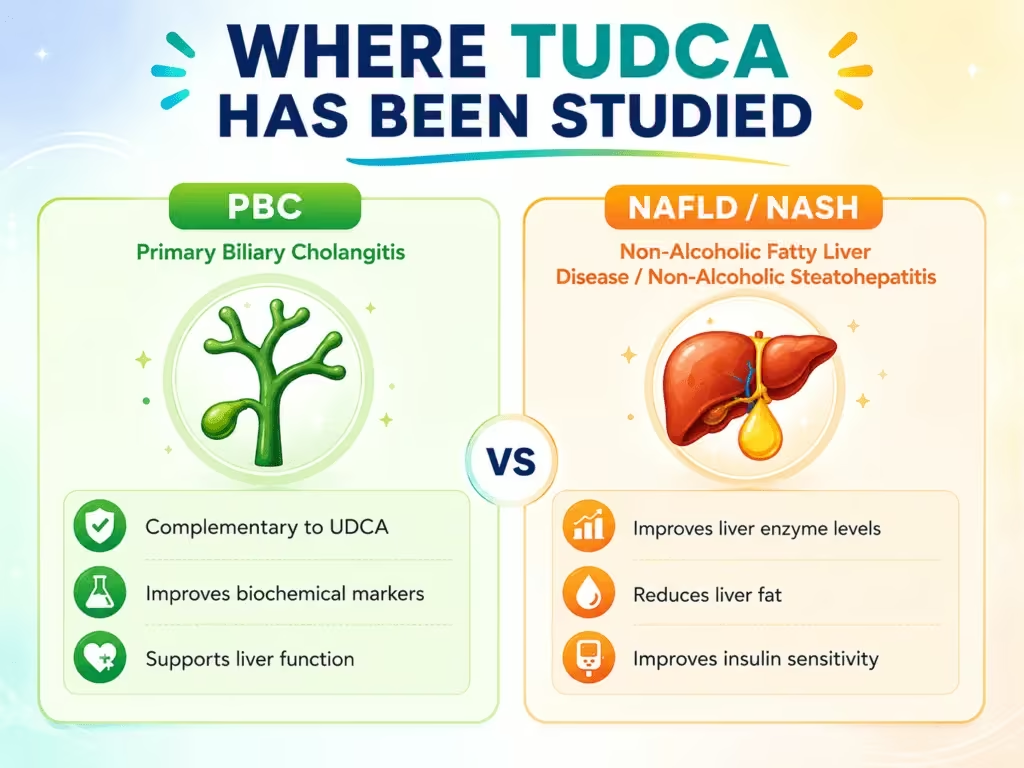
Explore where TUDCA has been studied and see the key research areas behind its growing interest.
Before we go any further, let’s be upfront about what this section is — and isn’t. This isn’t a highlight reel of miracle results. It’s a straightforward summary of where TUDCA has actually been studied in clinical research, so you can see the science for yourself rather than just taking our word for it.
Primary Biliary Cholangitis (PBC)
PBC is an autoimmune condition where the bile ducts gradually get damaged, leading to the same bile-flow slowdown (cholestasis) we covered in Section 7. Because TUDCA is structurally similar to UDCA — the standard treatment used for PBC — and shares that same ER-stress-reducing action, researchers have studied it as a complementary option alongside standard PBC care, not as a replacement for it.
NAFLD / NASH
Given TUDCA’s documented role in reducing ER stress — one of the mechanisms proposed to drive the progression from NAFLD to NASH — clinical researchers have examined its effects on things like liver enzyme levels (SGPT/SGOT), insulin sensitivity, and markers of cellular stress.
How we’re presenting this, honestly:
a. TUDCA is an active area of ongoing clinical research — not a guaranteed treatment for any diagnosed liver condition.
b. Wherever possible, we link directly to PubMed and NIH sources, so you can read the actual studies yourself.
c. We deliberately avoid any “cures” or “reverses disease” language — that’s not what the science currently supports, and it’s not how we’d want a supplement claim made to us either.
d. The value we’re highlighting is the documented mechanism — how TUDCA behaves at the cellular level — not a promised outcome.
11. Key Ingredients Breakdown
By this point, you’ve read through the science — now let’s talk about what’s actually inside the bottle. No filler explanations here, just a transparent look at what you’re taking and why.
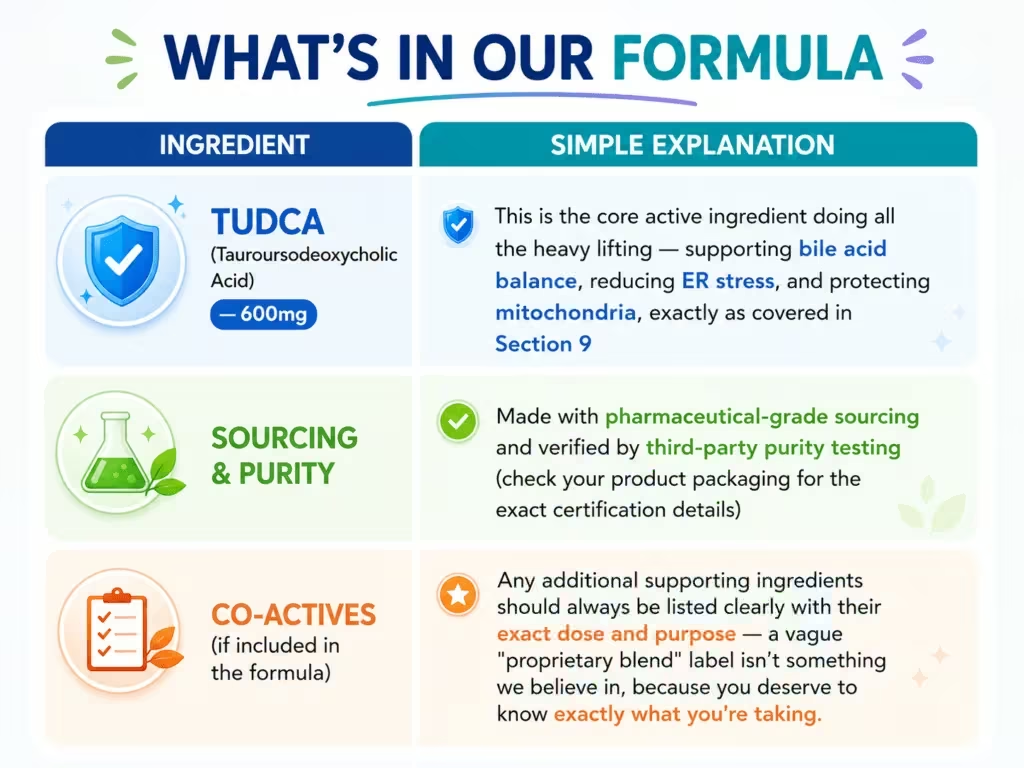
Know exactly what’s inside—see the powerful ingredients that make TUDCA a smarter liver support formula.
12. Benefits of TUDCA+ for Liver Health
By now, the science in Sections 7–9 makes this part easy to understand — so let’s connect it directly to what it actually means for you, day to day.
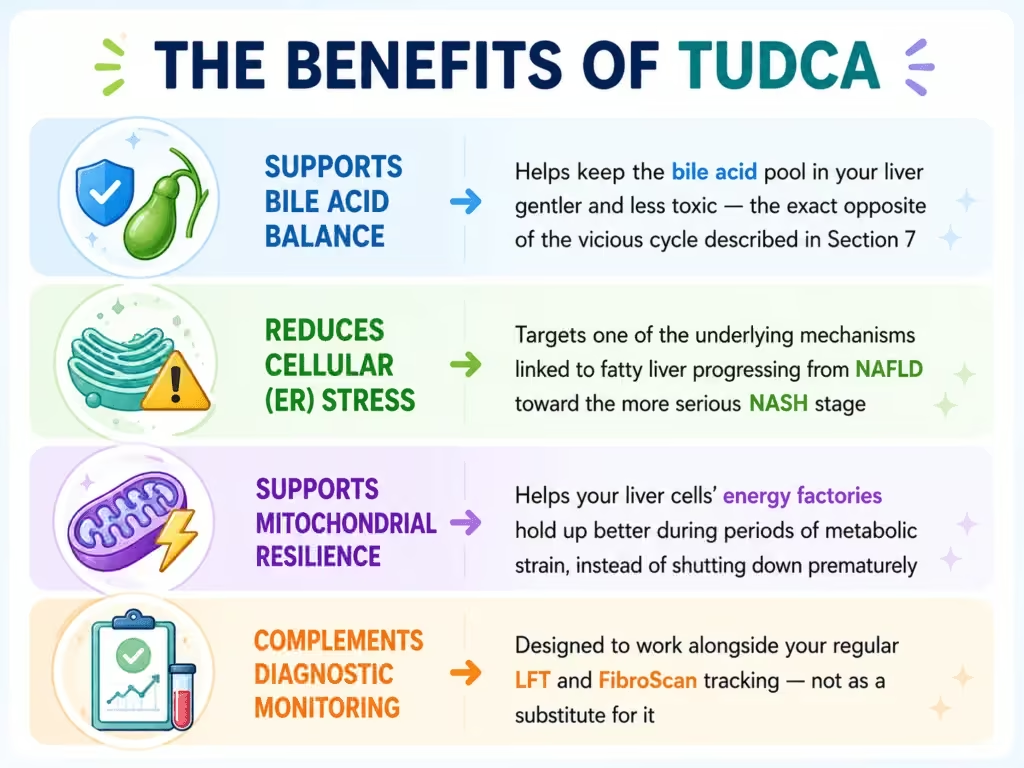
Power up your liver health—see how TUDCA supports bile balance, cell protection, and long-term wellness.
That last point is worth repeating: TUDCA+ isn’t meant to replace the tests you learned about in Sections 5 and 6. It’s meant to support your liver while you continue tracking real, measurable progress through those same tests.
13. How TUDCA+ Supports Specific Body Functions
Liver health doesn’t stay contained to just the liver — it ripples outward into other systems in your body. Here’s how supporting bile flow and liver function connects to three areas you might not immediately think to link together.
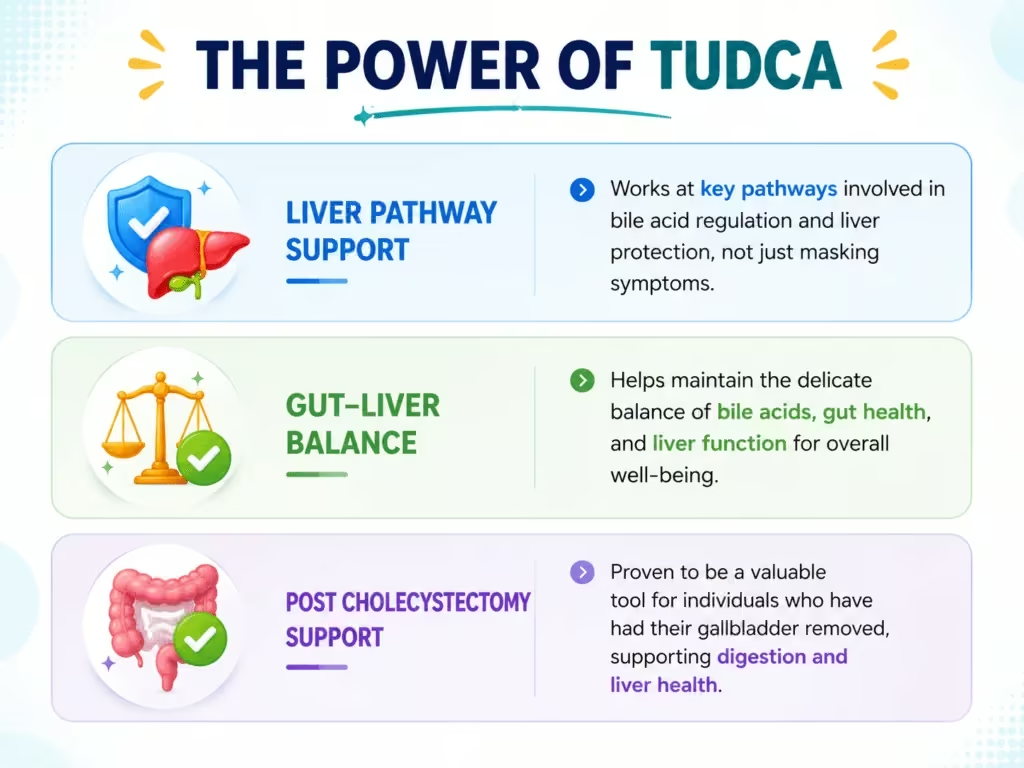
Boost your liver support—see how TUDCA helps detox, gut health, and life after gallbladder removal.
14. TUDCA and Fatty Liver Reversal — What the Research Says
This might be the most important question in the entire article: can fatty liver actually be reversed? The honest answer is — it depends entirely on which stage you’re in, from the four we covered back in Section 4. Stage 1, and most of Stage 2, are generally reversible with the right lifestyle changes. Once fibrosis (Stage 3) sets in, some of that damage becomes permanent, though slowing things down further is still very possible. Cirrhosis (Stage 4) is generally not reversible.
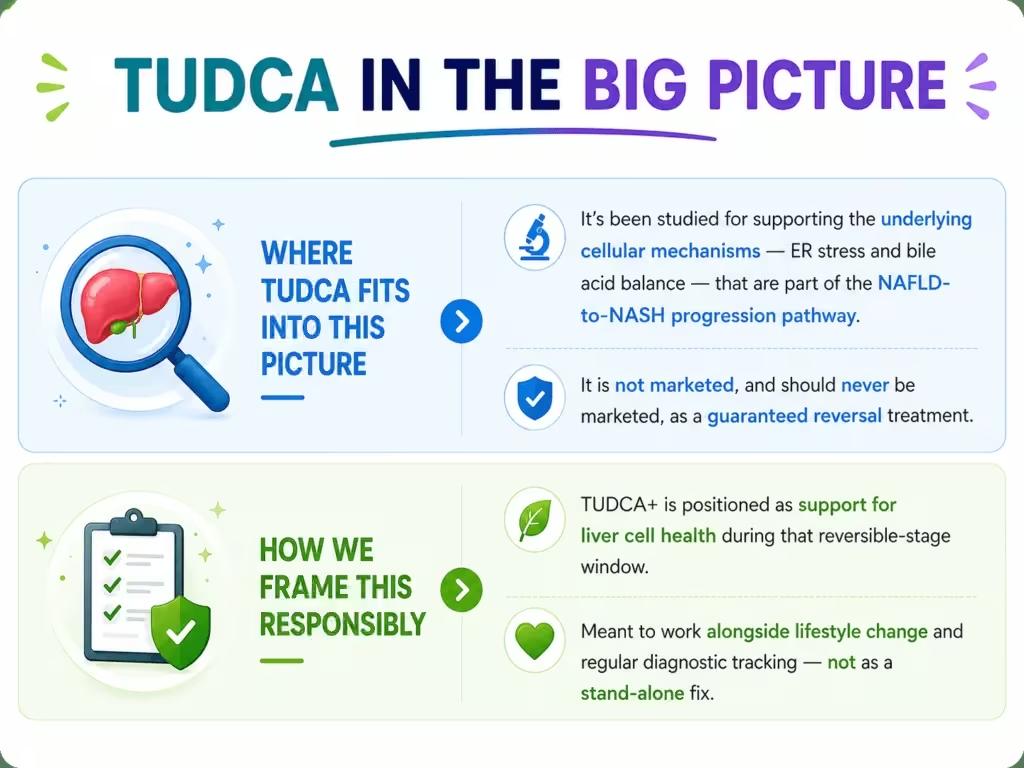
See where TUDCA fits and learn the smart way to support your liver with confidence.
So here’s the real takeaway: the biggest factor in reversal isn’t a supplement — it’s timing. Catching fatty liver in Stage 1 or 2, making real lifestyle changes, and supporting your liver cells at the mechanism level gives you the best shot at turning things around.
15. Who Should Use TUDCA+?
After all that science, you might be wondering, “Okay, but is this actually meant for me?” Here’s a straightforward look at who TUDCA+ is genuinely designed for.
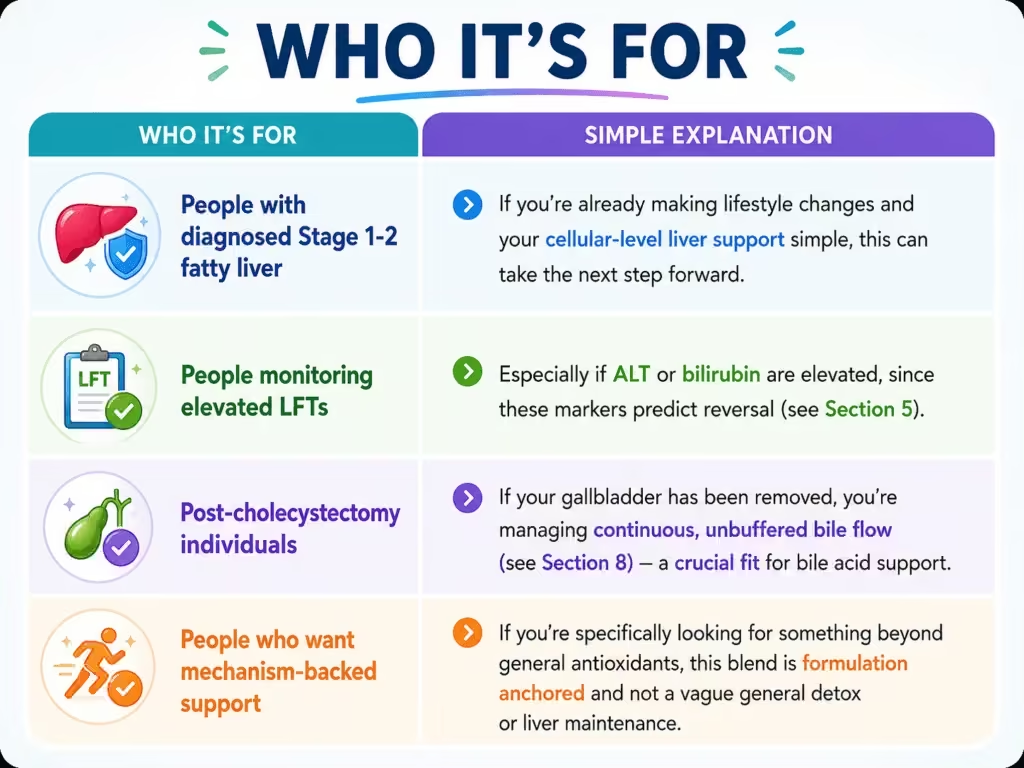
Find out if TUDCA is the right fit for your liver health journey with clear, trusted guidance.
16. Who Should Avoid It / Consult a Doctor First
Just as important as knowing who TUDCA+ is designed for is knowing who should pause and talk to a doctor before starting it. This section isn’t about scaring you — it’s about being upfront, the way we’d want any brand to be with us.
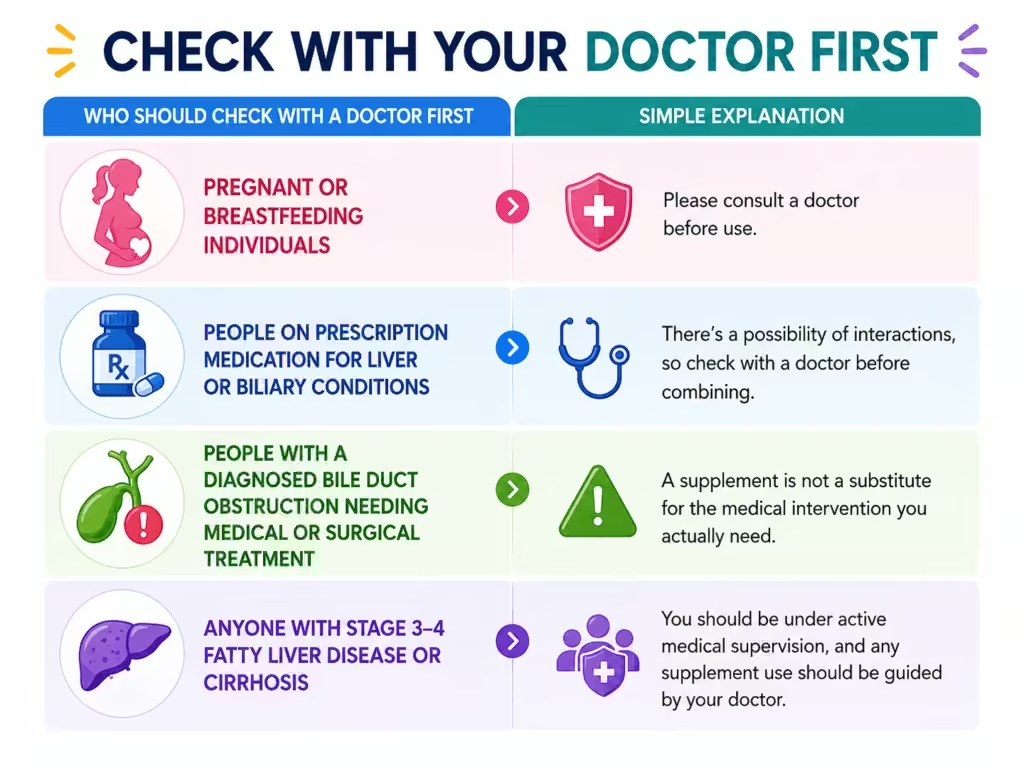
Stay safe—know when to talk to your doctor before adding TUDCA to your routine.
If you fall into any of these categories, the right first step isn’t a supplement — it’s a conversation with your doctor.
17. Recommended Dosage
Once you’ve decided TUDCA+ makes sense for you, the next natural question is simple: how much, and how often? Here’s the straightforward answer.
Take TUDCA the right way—follow these powerful tips for safe and consistent daily use.
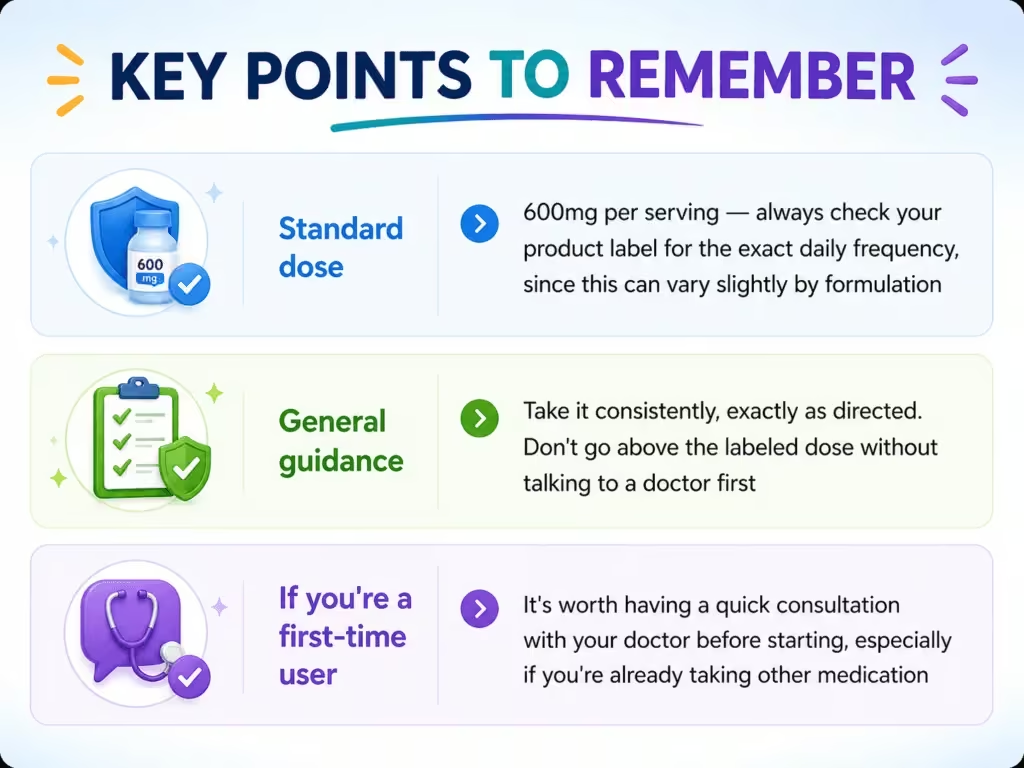
Take TUDCA the right way—follow these powerful tips for safe and consistent daily use.
18. Best Time to Take TUDCA+
A question we hear often: “Should I take this in the morning or at night?” The reassuring answer is — there’s no single “correct” time. What actually matters more is picking a time and sticking with it.
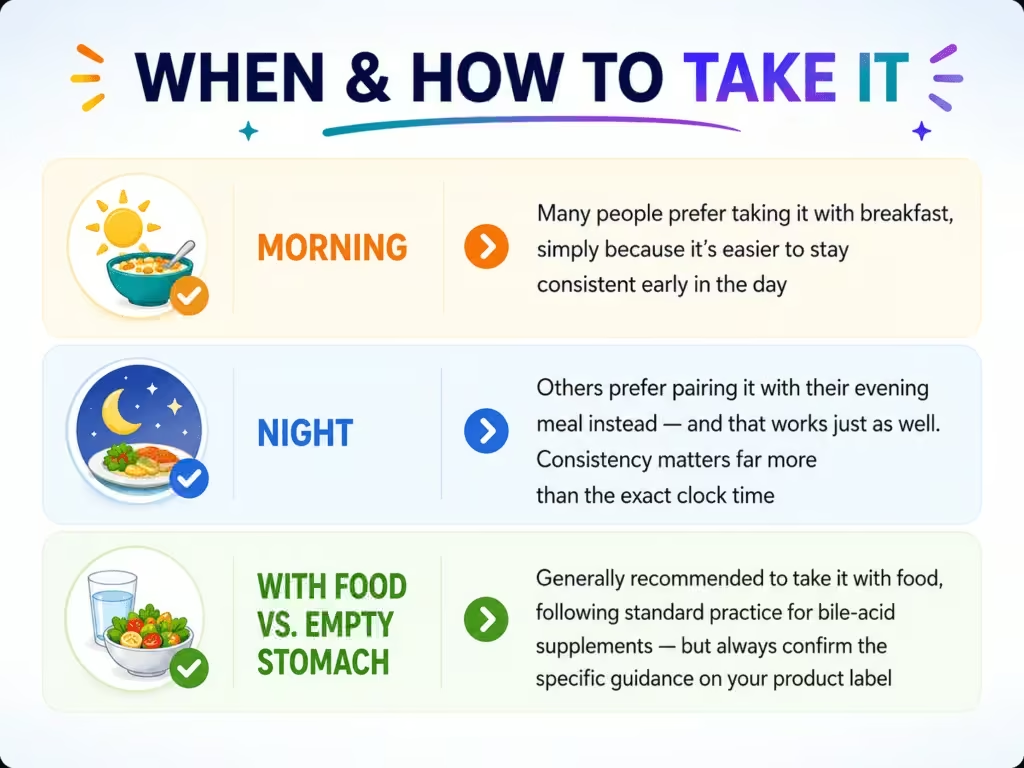
Choose the best time to take TUDCA and build a powerful routine that’s easy to follow every day.
So really, the best time to take TUDCA+ is whichever time you’ll actually remember to take it, every single day.
19. Can You Take TUDCA+ With Other Liver Supplements?
If you’re already exploring liver support, you’ve probably wondered whether TUDCA+ can be combined with anything else you’re taking. The short answer is yes, often — but with a few sensible guidelines worth knowing.
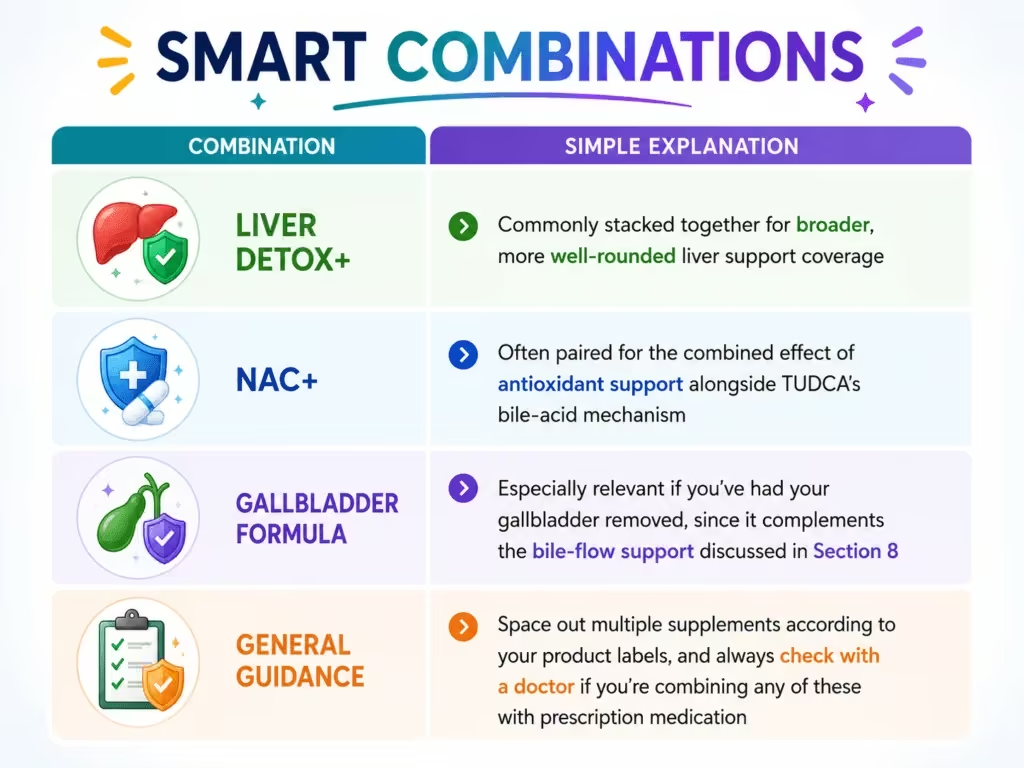
Boost your liver support by pairing TUDCA with the right supplements for even better results.
The bottom line: stacking is common practice for liver support, but “common” doesn’t mean “automatic” — a quick label check and, where needed, a doctor’s input keeps things safe.
20. Potential Side Effects
No honest liver-health article would skip this part — so let’s talk about it plainly. Most people tolerate TUDCA+ well, but like any supplement, it’s worth knowing what’s possible.
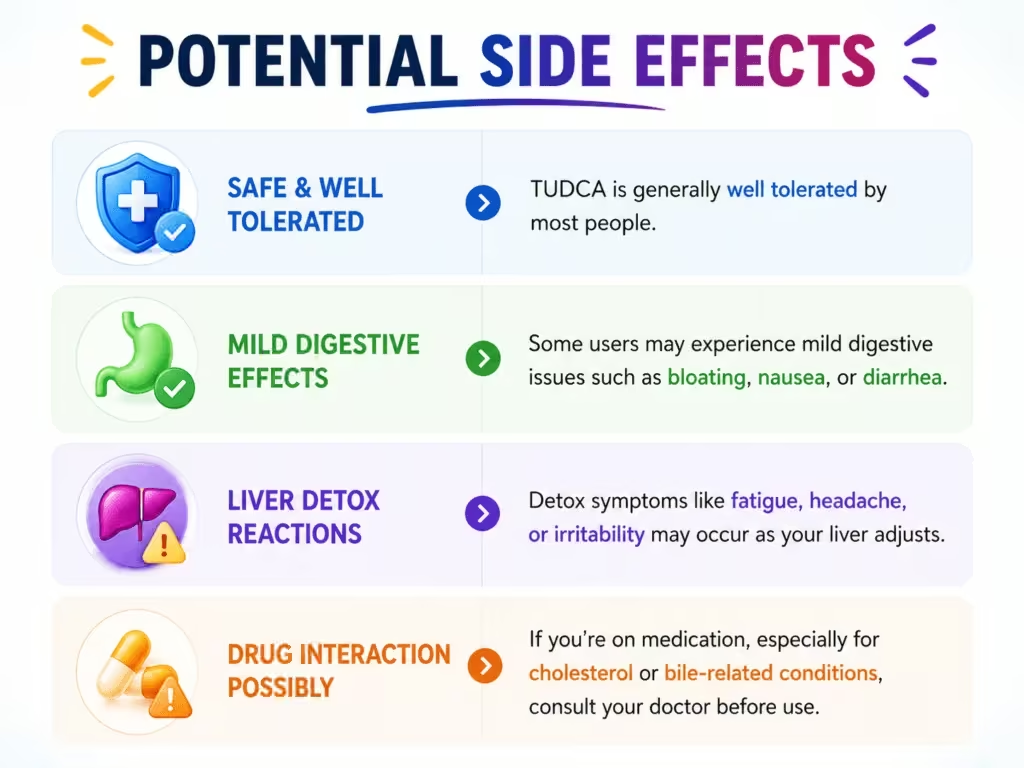
Stay informed—learn the possible side effects of TUDCA and use it with greater confidence.
We’re listing these openly, not to alarm you, but because transparency is exactly what you deserve from a health brand — and honestly, it’s what any of us would want before putting something new into our bodies.
21. Liver Cirrhosis — Early Warning Signs
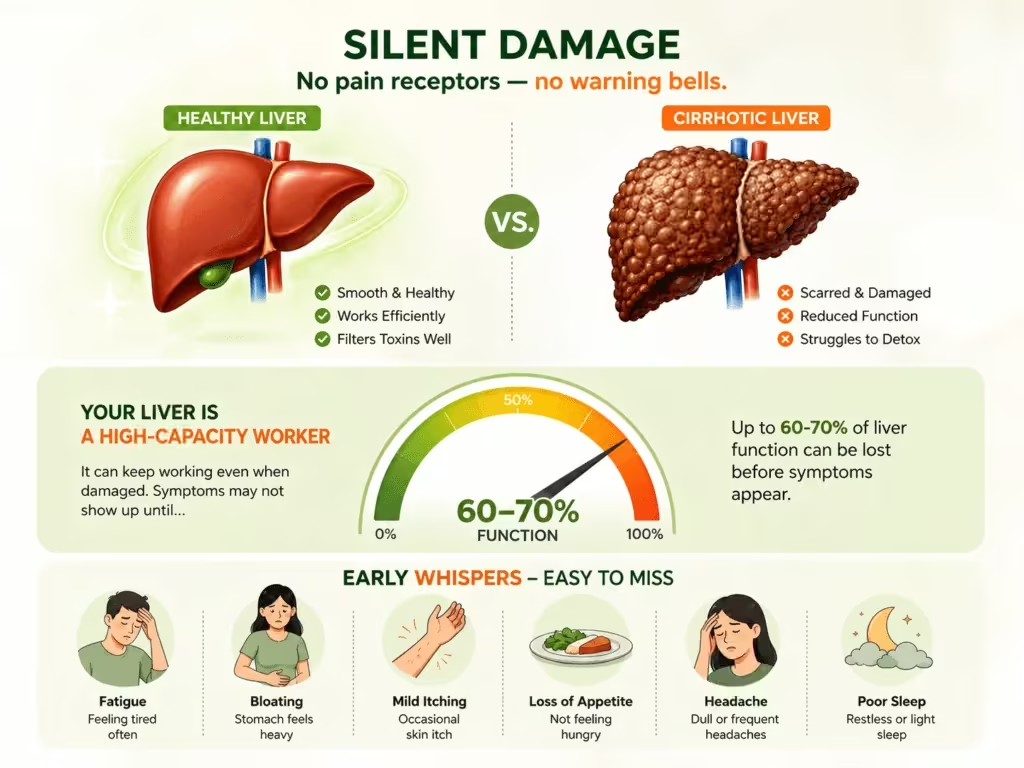
Your liver may stay silent for years—learn the hidden warning signs before they become serious.
Cirrhosis doesn’t happen overnight. It’s what happens after years of quiet damage to your liver.
Here’s the tricky part: your liver doesn’t have pain receptors. So it can’t “hurt” the way a sprained ankle or a headache does. It just keeps working, silently taking damage, without sending you any obvious signal.
To make things trickier, your liver is a bit of an overachiever. Even when it’s scarred and struggling, it can still run at 60-70% capacity. That means you could be walking around feeling mostly fine, while real damage is building up underneath.
This is exactly why early signs of liver trouble are so easy to miss. They don’t scream for attention. They whisper — a bit of tiredness here, some bloating there. Most people brush them off as stress, poor sleep, or just “getting older.”
Knowing these early whispers can make a real difference. Catching liver damage early gives you time to act, before it turns into something harder to reverse.
21.1 Early Warning Signs, Explained One by One
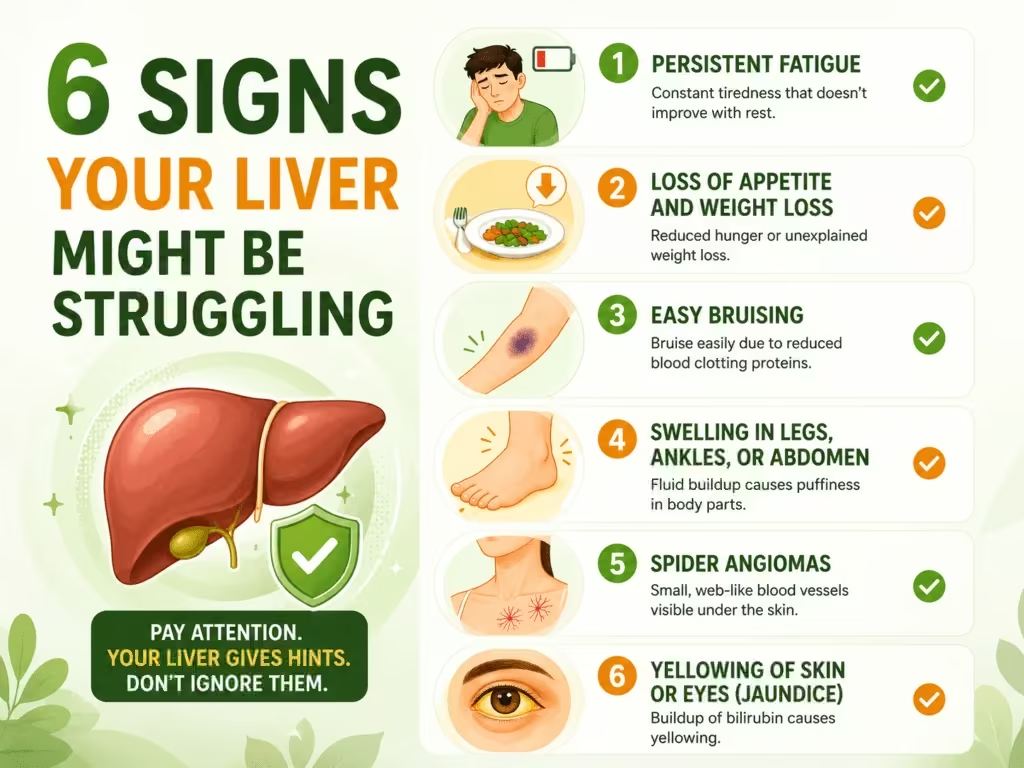
Spot these powerful liver warning signs early and take action before they become bigger problems.
Your body doesn’t stay silent forever. Even when your liver hides its damage well, it eventually starts dropping small hints. The problem is, these hints look so ordinary that most people miss them completely. Let’s go through each one, so you know exactly what to watch for.
1. Persistent fatigue
Your liver plays a big role in managing your body’s energy. When it’s under stress, that job gets harder — and you feel it. This isn’t the “I stayed up late” kind of tired. It’s a deeper tiredness that doesn’t go away, even after a full night’s sleep.
2. Loss of appetite and unexplained weight loss
A liver that’s struggling can’t process nutrients the way it should. This often shows up as reduced hunger, or clothes fitting looser than usual — without any diet change to explain it.
3. Easy bruising
Your liver makes the proteins responsible for clotting your blood. When it’s not working at full strength, even a light bump against a table can leave a noticeable bruise.
4. Swelling in the legs, ankles, or abdomen
This connects back to albumin, a protein we covered earlier in this article. Low albumin means your blood vessels can’t hold onto fluid properly, so it leaks into surrounding tissue — showing up as puffiness or swelling.
5. Spider angiomas
These are small, web-like clusters of blood vessels that appear just under the skin. They happen because a struggling liver can’t keep hormone levels balanced the way it normally would.
6. Yellowing of the skin or eyes (jaundice)
This is one of the more well-known signs. It happens when bilirubin — a waste product we also discussed earlier — builds up in your blood instead of being cleared out properly.
21.2 Why Catching It Early Matters
Here’s the honest truth: once cirrhosis reaches an advanced stage, the scarring is permanent. That’s why the “early warning” stage isn’t just important — it’s your best and possibly last window to actually change the outcome.
Think of it like a chain reaction. It usually starts small — a fatty liver. Left unchecked, this creates stress on your bile acids. Over time, that stress can lead all the way to cirrhosis. It’s important to understand this isn’t three separate problems. It’s one story, unfolding in stages.
The earlier you step into this story, the more power you have. Simple things — a few lifestyle changes, the right medical guidance, and liver-supportive nutrition — can genuinely slow this progression, and in many cases, stop it from advancing further. But this only works if you catch it early.
This is exactly why regular LFT (Liver Function Test) monitoring matters so much. It’s also why understanding fatty liver and bile acid health isn’t just “nice information” — it’s a practical tool. Waiting until cirrhosis shows up is waiting far too long. Catching the story in its early chapters is always the smarter move.
22. Liver Detox Myths vs Science
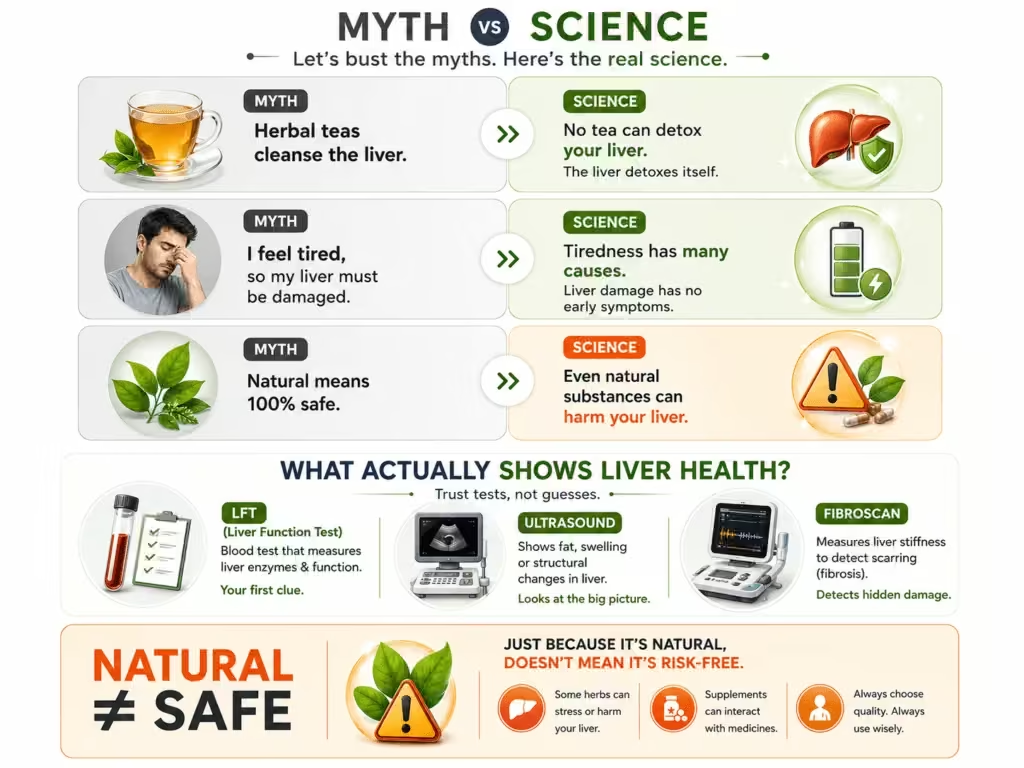
Stop believing myths—protect your liver with real science and smart choices.
The word “detox” gets thrown around a lot — teas, juices, cleanses, you name it. But a lot of what’s marketed as liver detox has very little to do with how your liver actually works. Let’s separate the myths from the science.
Myth: Detox teas and juice cleanses flush toxins from your liver
Here’s the thing — your liver is already detoxing your blood, every single minute of every day. That’s literally its job, and it doesn’t need a tea or juice to do it. There’s no solid scientific evidence that these products speed up detox in any meaningful way. In fact, some unregulated “detox” herbal blends have done the opposite — putting extra strain on the liver instead of helping it.
Myth: Feeling bloated or tired means your liver is “toxic”
Fatigue and bloating are frustratingly common symptoms. They could point to poor sleep, stress, digestion issues, thyroid problems, or a dozen other things. On their own, they simply aren’t reliable signs of liver trouble. If you actually want to know how your liver is doing, the real answers come from LFTs (Liver Function Tests), ultrasound grading, or a FibroScan — not how tired you feel on a given day.
Myth: If it’s natural or herbal, it must be safe for your liver
This is one of the most common — and riskiest — assumptions people make. Some of the most well-documented cases of liver injury from medication actually come from unregulated herbal or dietary supplements. Why? Because “natural” products often skip the rigorous testing and quality checks that regulated medicines go through. Real safety comes from evidence and quality control — not from a product simply being labeled “herbal” or “natural.”
22.1 What Actually Supports Liver Health, Science-Backed
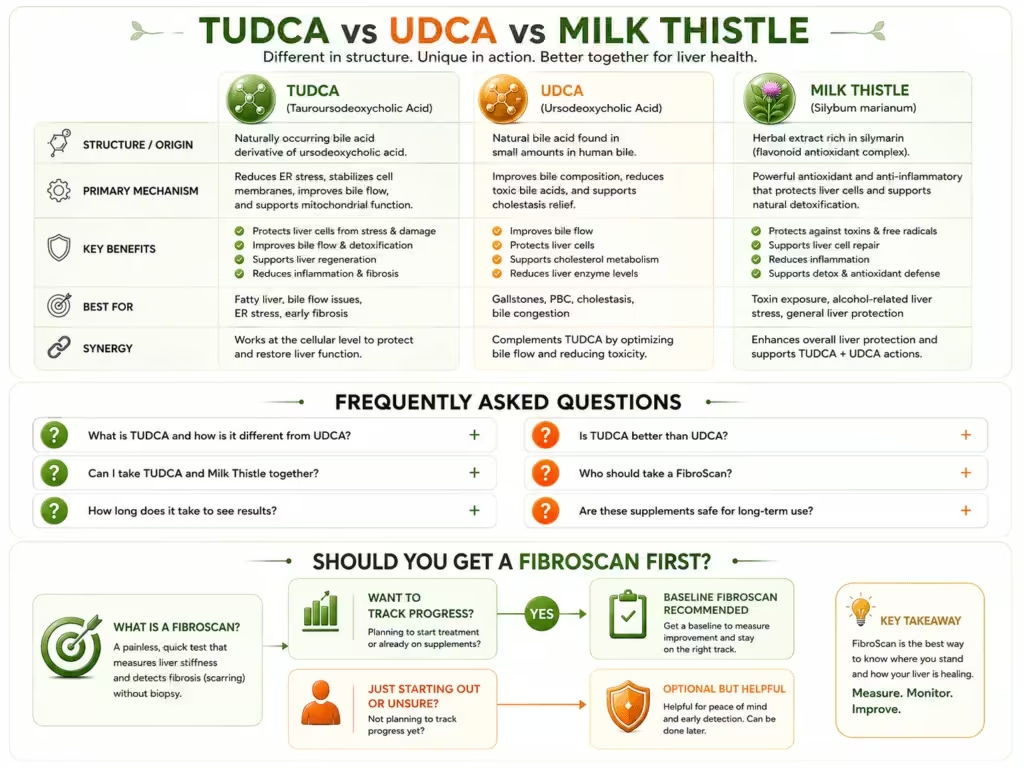
Build a stronger liver with four powerful daily habits that truly make a difference.
Now that we’ve cleared up the myths, here’s the part that actually matters — what genuinely helps your liver, based on real evidence, not trends.
1. Maintaining a healthy weight and reducing visceral fat
This one has a direct, well-documented effect. Less visceral fat (the fat around your organs) means a lower risk of fatty liver in the first place — something we covered in detail earlier in this article.
2. Limiting alcohol intake
This is one of the most straightforward and proven ways to protect your liver. Less alcohol means less direct strain on liver cells, and a lower risk of alcohol-related fatty liver disease (AFLD).
3. Managing blood sugar and insulin resistance
This might not sound liver-related at first, but it’s actually one of the biggest factors. Insulin resistance is a core driver behind non-alcoholic fatty liver disease (NAFLD), so keeping your blood sugar in check plays a direct role in liver health.
4. Choosing ingredients backed by real mechanisms, not marketing
Not all liver-support ingredients are created equal. Some, like TUDCA, have documented mechanisms — such as helping reduce ER (endoplasmic reticulum) stress and supporting healthy bile acid balance, both of which we explored earlier in this article. The difference is important: this is mechanism-backed support, not something riding on a wellness trend.
23. Frequently Asked Questions
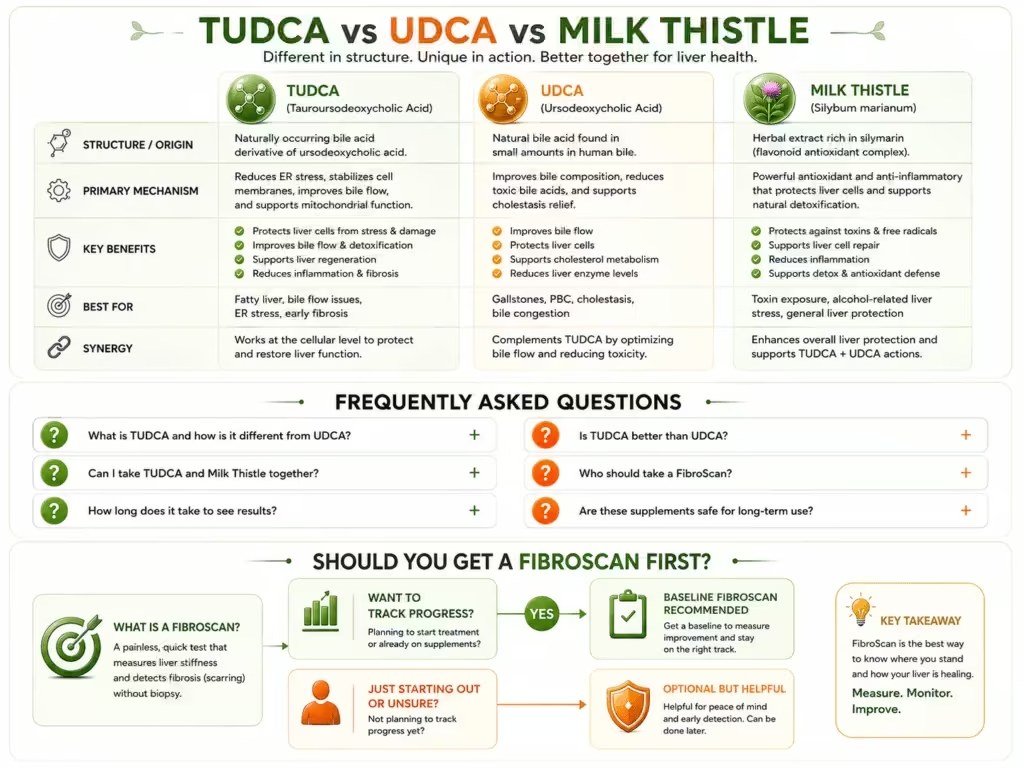
Choose smarter liver support by understanding what makes each option different.
Got questions? You’re not alone. These are the ones we hear most often — answered honestly and simply.
Is TUDCA the same as UDCA?
Not quite, though they’re closely related. TUDCA is basically UDCA with taurine attached to it. Think of them as cousins, not twins — structurally connected, but not identical.
Can TUDCA reverse fatty liver?
This depends a lot on how advanced the fatty liver is, something we explained earlier in this article. TUDCA has been studied for supporting the underlying cellular processes involved in liver health. But it’s important to be honest here — it isn’t a guaranteed “reversal” treatment, and no supplement should be marketed that way.
Is TUDCA safe for long-term use?
This is a fair question, and the honest answer is: talk to your doctor, especially if you’re on other medications. Long-term use should always be a conversation with a healthcare professional, not a decision based on an article alone.
Does TUDCA help after gallbladder removal?
Yes, this is actually one of the more relevant use cases. After gallbladder removal, bile flow in your body changes. TUDCA’s role in supporting bile acid balance connects directly to this, which we covered in more detail earlier.
How is TUDCA different from milk thistle?
Good question, since people often compare the two. Milk thistle mainly works as a general antioxidant. TUDCA works differently — through specific mechanisms like reducing ER (endoplasmic reticulum) stress and protecting mitochondria, which we explained earlier in this article.
Do I need a FibroScan before starting TUDCA+?
Not mandatory, no. But having a baseline LFT or FibroScan result can be genuinely useful — it gives you something to compare against later, so you can actually track whether your liver markers are improving over time.
24. TUDCA+ vs Competitor Liver Supplements
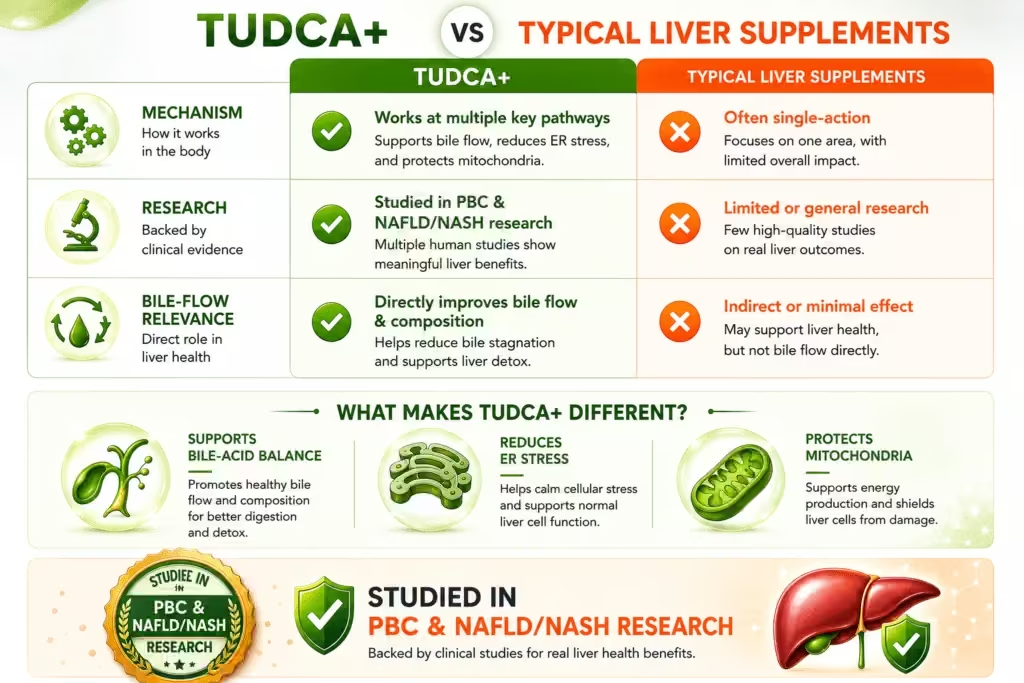
See why TUDCA+ stands out with powerful science and targeted liver support.
With so many liver supplements on the market, it’s easy to assume they all work the same way. They don’t. Here’s an honest, mechanism-based comparison of TUDCA+ against typical liver supplements.
How they actually work
Most liver supplements on the market lean on general antioxidant activity — a broad, catch-all approach. TUDCA+ works differently. It targets three specific mechanisms: balancing bile acids, reducing ER (endoplasmic reticulum) stress, and protecting mitochondria. This isn’t a broader “might help” approach — it’s a targeted one.
The research behind it
This is where the difference really shows. Many liver supplements make wide, general “supports liver health” claims, without pointing to any specific mechanism study. TUDCA, on the other hand, has been studied for particular conditions — including PBC (Primary Biliary Cholangitis) and NAFLD/NASH — giving it a more specific, mechanism-backed research base rather than a generic one.
Relevance to bile flow issues
If your concern is specifically bile flow — something we’ve explained in detail earlier in this article — this is a meaningful difference. TUDCA+’s mechanism connects directly to bile acid composition. Most typical liver supplements simply don’t have this same direct relevance.
25. What Makes Fitness Veda Different?
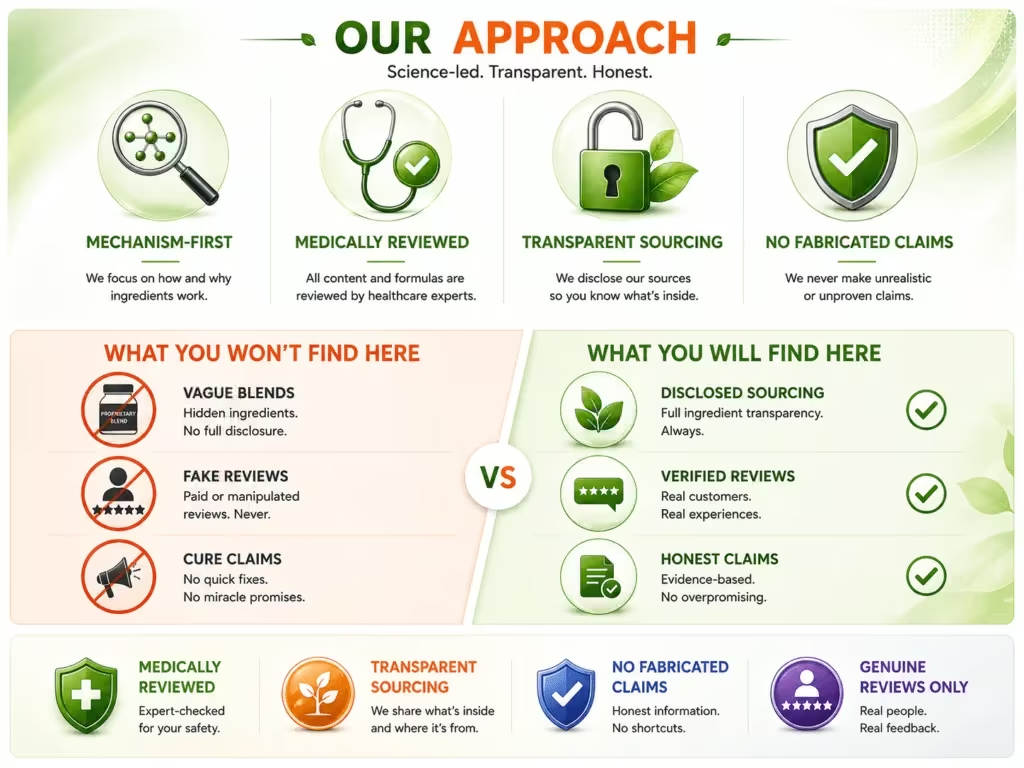
Build confidence with honest information, real transparency, and trusted science.
By now, you’ve read through a lot of real information — diagnostics, mechanisms, myths, honest comparisons. That’s not an accident. It reflects how we approach everything we do. Here’s what that actually means.
We explain before we sell
Notice how this entire article walked you through diagnostics like LFTs, FibroScan, and CAP scores before it ever got to product claims? That’s intentional. We believe you should genuinely understand your liver health first. A purchase decision should come after understanding — not instead of it.
Every piece of content goes through medical review
Nothing here is written and published without a check. Our content is reviewed for medical accuracy and to stay aligned with supplement-advertising guidelines. This matters more than most people realize in an industry where misinformation spreads easily.
We don’t hide behind vague labels
You won’t find our ingredient lists tucked behind a vague “proprietary blend.” Dosage, purity, and sourcing are disclosed clearly. If we’re asking you to trust what you’re putting into your body, we believe you deserve to actually see what’s in it.
We don’t fabricate anything
No cure claims. No guarantees. No made-up testimonials dressed up to look real. Any customer feedback you see from us is genuine and verified — nothing staged, nothing invented.
26. Real User Experience
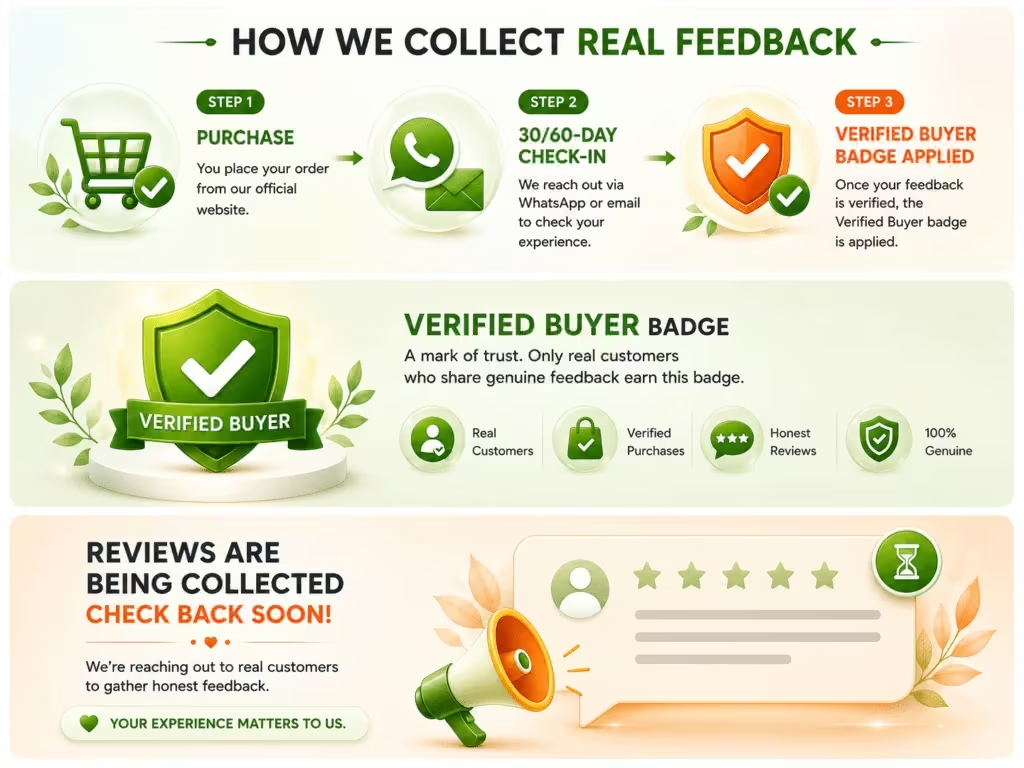
Trust every review by seeing how real customer feedback is collected and verified.
This section works a little differently from the rest of the article — and that’s intentional.
Instead of filling this space with generic testimonials, we hold it for something more valuable: real feedback from real buyers. Here’s exactly how that works.
How we collect it
We follow up directly with customers through WhatsApp or email, at the 30-day and 60-day mark after their purchase. This timing matters — it gives people enough time to actually experience results, rather than rushing feedback right after checkout.
How we verify it
Every review that carries a “Verified Buyer” badge has earned it. That badge is only applied once we’ve confirmed the person actually purchased and used the product — not assumed, not guessed.
Why this section may look different
Until genuine reviews come in, you won’t see review schema markup applied here. We don’t believe in dressing up placeholder content to look like real customer feedback — if it’s not real yet, it’s not published yet.
27. Lifestyle Tips to Maximize Liver Recovery
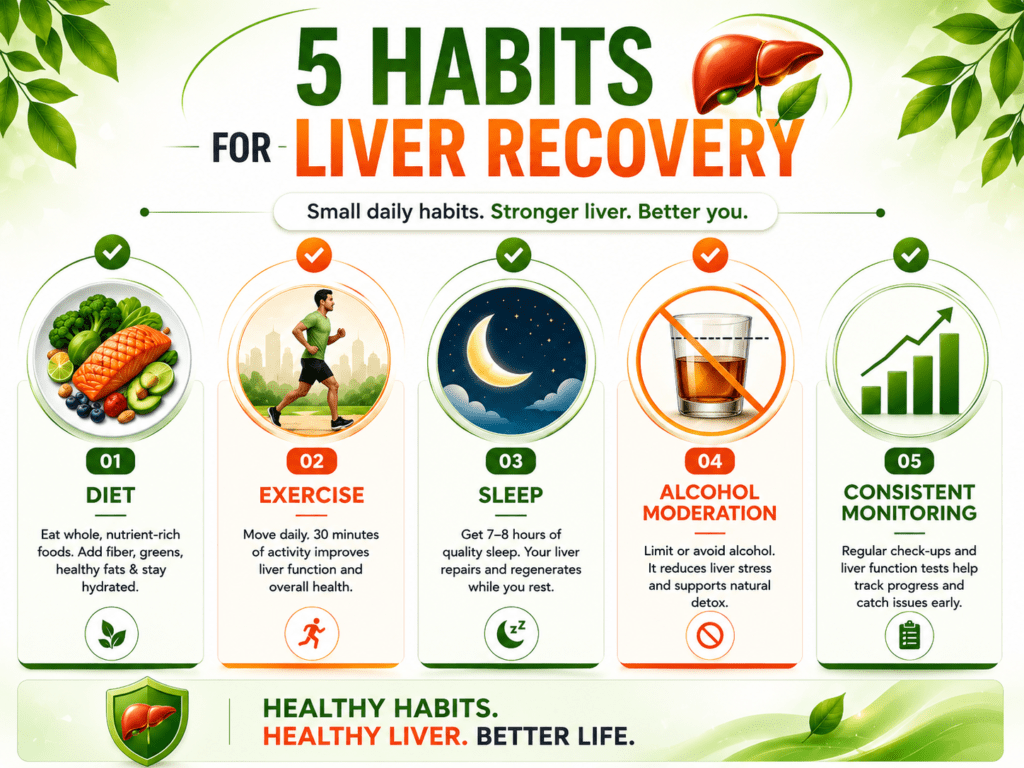
Boost your liver health with five simple daily habits that deliver powerful results.
Supplements and monitoring are important pieces of the puzzle, but they work best alongside the right daily habits. Here are five practical, science-backed changes that genuinely support liver recovery.
1. Diet
You don’t need a complicated diet plan. Start simple — cut back on refined sugar and saturated fat, and make more room for fiber, lean protein, and vegetables. Small, consistent changes here add up over time.
2. Exercise
Movement matters more than intensity. Regular, moderate activity — even a daily walk — helps improve insulin sensitivity and reduces visceral fat, both of which directly support liver health.
3. Sleep
This one surprises people. Poor sleep isn’t just about feeling tired the next day — it’s actually linked to insulin resistance, one of the key drivers behind NAFLD. Prioritizing good sleep is genuinely a liver-health decision, not just a comfort one.
4. Alcohol moderation
We touched on this earlier, and it’s worth repeating: cutting back on alcohol directly reduces the risk of alcohol-related fatty liver disease, and it supports recovery even if some fatty liver is already present.
5. Consistent monitoring
Lifestyle changes work — but how do you know they’re actually working? This is where periodic LFT and FibroScan tracking, which we explained earlier in this article, becomes valuable. It turns “I hope this is helping” into “I can see this is helping.”
28. Common Mistakes People Make
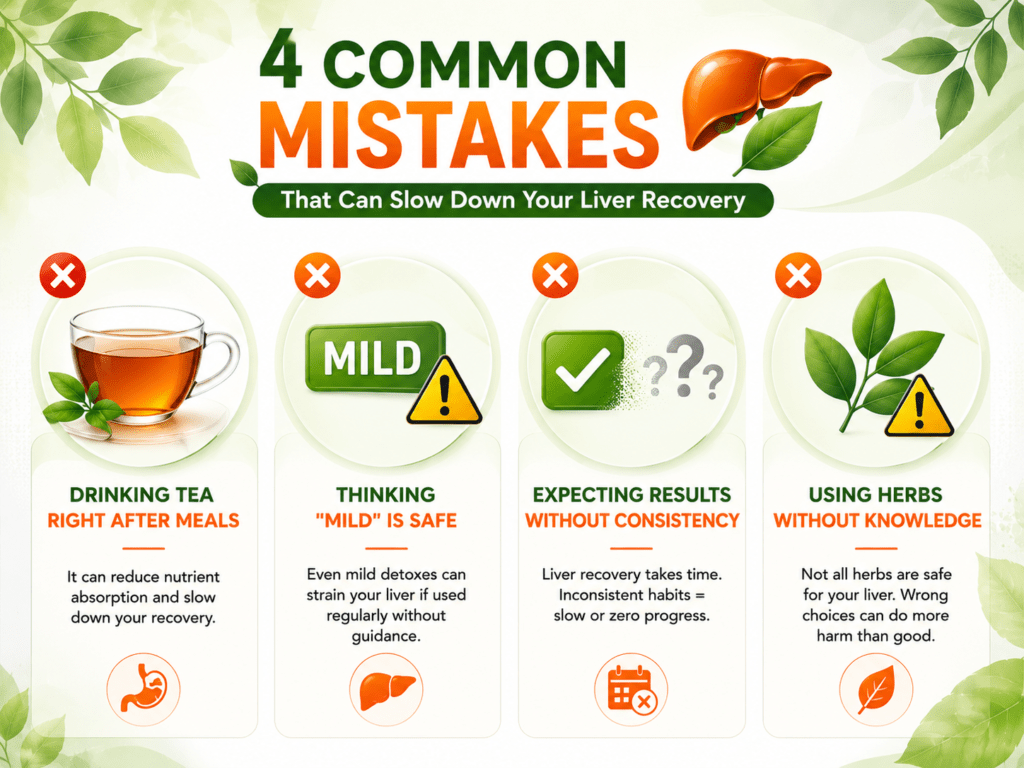
Avoid these common mistakes and give your liver the best chance to recover.
Even well-meaning people make missteps when it comes to liver health — often without realizing it. Let’s look at the most common ones, so you can avoid them.
1. Relying on detox teas instead of evidence-based changes
We covered this in detail earlier in this article: there’s simply no scientific support for the idea that tea or juice cleanses speed up liver detox. Leaning on these instead of proven changes can mean missing out on what actually works.
2. Ignoring “mild” Grade 1 fatty liver
This is an easy one to fall into. “Mild” sounds harmless, so it’s tempting to brush it off. But Stage 1 fatty liver is actually the most reversible window you’ll get. Waiting and delaying action reduces your chances of a full recovery — which is exactly why this stage deserves attention, not dismissal.
3. Stopping monitoring after just one normal LFT
One good result feels reassuring, so it’s natural to stop checking. But liver markers can fluctuate over time. A single normal LFT doesn’t tell the whole story — consistent, periodic re-testing is what actually shows you the real trend.
4. Assuming “natural” automatically means safe
We touched on this earlier too, and it’s worth repeating because it trips up so many people. The word “natural” doesn’t guarantee safety. What actually matters is the quality and evidence behind a supplement — not just the label it carries.
29. When to Get Re-Tested (LFT / FibroScan Follow-Up)
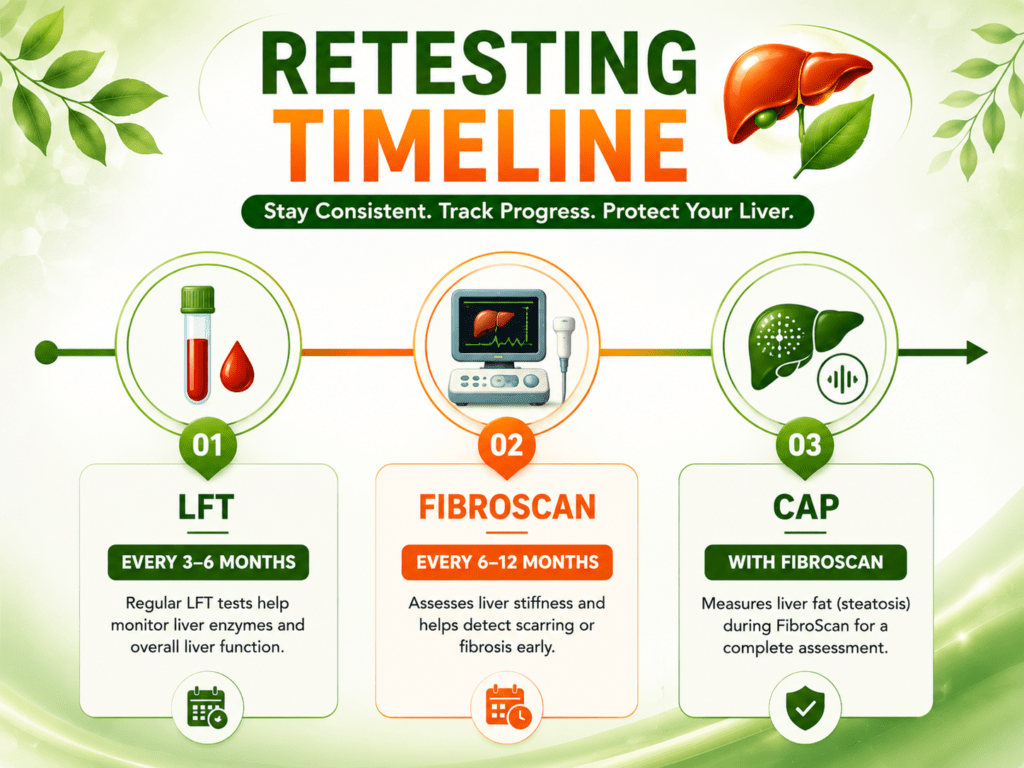
Stay ahead of liver problems with the right tests at the right time.
Knowing your numbers once is a good start. But liver health isn’t a one-time check — it’s something worth tracking over time. Here’s a simple guide on when to go back for testing.
LFT follow-up
If you’re actively working on managing fatty liver, getting your LFTs checked every 3 to 6 months is a good general rule. That said, your doctor knows your specific situation best, so always follow their guidance over any general timeline.
FibroScan follow-up
This one doesn’t need to happen as often. Typically, every 6 to 12 months is enough to track how your fibrosis stage is trending — whether it’s improving, staying stable, or needs more attention.
CAP score follow-up
This is usually done at the same time as your FibroScan, since it’s part of the same scan. It specifically tracks changes in fat percentage, giving you a clearer picture of whether your liver’s fat levels are moving in the right direction.
When you should retest sooner
Two situations call for earlier testing. First, if you notice any new symptoms — the kind we walked through earlier in this article. Second, if you’ve just started a new liver-support routine and want to see how your numbers compare from before you started to after. In both cases, don’t wait for your “scheduled” retest — getting checked sooner gives you clearer, more useful information.
30. Expert Insights & Recommendations
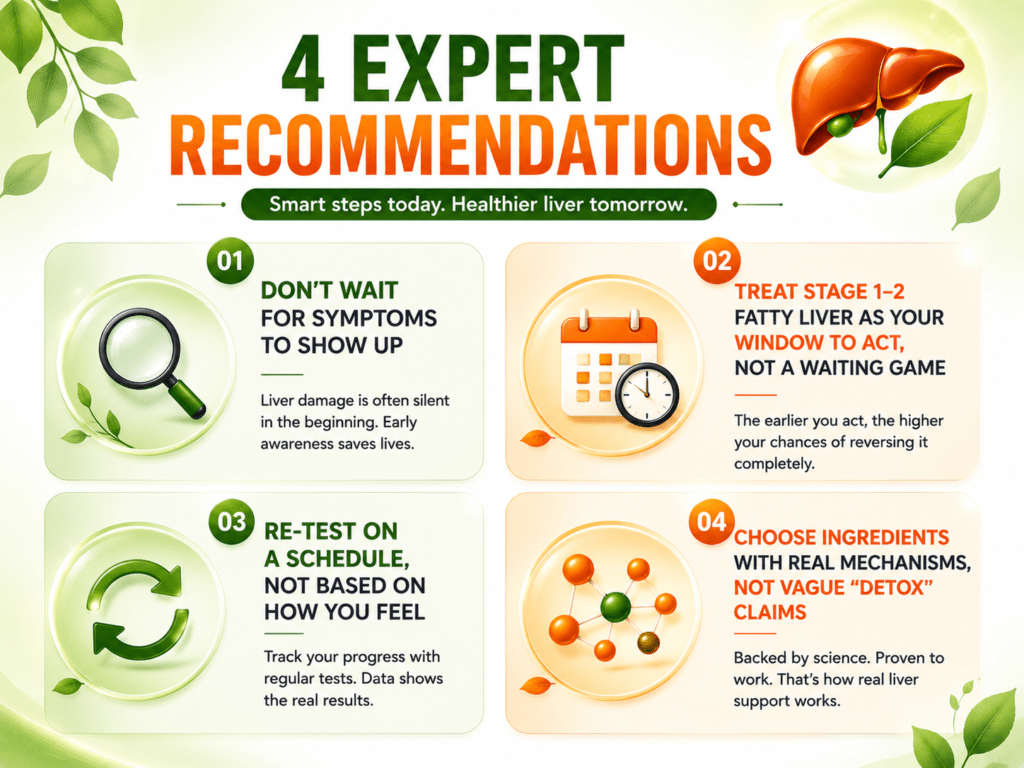
Take control today with four expert tips for a healthier liver tomorrow.
If there’s one big takeaway from everything we’ve covered, it’s this: liver health isn’t something you check once and forget. It works best when you combine three things — objective diagnostics like LFT, FibroScan, ultrasound, and CAP; consistent lifestyle changes; and, where it makes sense, mechanism-backed supplementation.
The strongest approach doesn’t treat fatty liver as a single diagnosis you react to once and move on from. It treats it as an ongoing progression — something you actively manage and keep an eye on, the same way you would with any long-term health goal.
Here’s what that looks like in practice:
Recommendation 1: Don’t wait for symptoms to show up
As we explained earlier in this article, your liver can stay silent even while it’s under stress. That’s exactly why waiting for obvious symptoms isn’t a great strategy. Getting baseline LFTs — and a FibroScan if it’s indicated — is especially worth doing if you have risk factors like obesity or insulin resistance. Early information is far more useful than a late warning sign.
Recommendation 2: Treat Stage 1–2 fatty liver as your window to act, not a waiting game
We touched on this earlier too, and it’s worth restating clearly: Stage 1 and Stage 2 fatty liver are your best opportunity for meaningful reversal. Adopting a “wait and see” approach here means potentially losing the exact window where change is easiest to make. Acting during this stage isn’t overreacting — it’s exactly the right time to respond.
Recommendation 3: Re-test on a schedule, not based on how you feel
We covered this earlier as well: feeling fine doesn’t always mean your liver markers are fine. Relying on how you feel can quietly delay catching real changes. Sticking to a consistent re-testing schedule — as we outlined earlier in this article — gives you accurate, trackable information, instead of a guess based on symptoms that may not even show up until much later.
Recommendation 4: Choose ingredients with real mechanisms, not vague “detox” claims
By now, this theme should feel familiar. General “detox” marketing claims sound appealing, but they rarely point to any specific, documented mechanism. When you’re choosing liver-support ingredients, look for ones backed by clear, studied mechanisms — the kind we’ve explained throughout this article — rather than broad claims that sound good but explain very little.
31. Clinical & Scientific References
Build confidence with trusted sources backed by real science and transparent research.
This article draws on information from established medical and research sources, rather than general claims. Here’s where our information comes from, so you can explore further if you’d like.
PubMed
Used for peer-reviewed clinical research on TUDCA, ER stress mechanisms, and studies related to PBC (Primary Biliary Cholangitis) and NAFLD (Non-Alcoholic Fatty Liver Disease).
NIDDK / NIH
Referenced for trusted overviews on NAFLD, cholestasis, and how bile acid metabolism works in the body.
Healthline
Used specifically for general LFT (Liver Function Test) reference range context, to help explain what “normal” ranges typically look like.
ICMR / AIIMS-affiliated publications
Referenced for India-specific data on fatty liver prevalence, since liver health patterns can vary by population and region.
32. Medical Disclaimer
Read this carefully to make smarter, safer decisions for your liver health.
Before you go, a few important things to keep in mind.
This article is meant to educate, not to diagnose or treat any condition. Nothing here should be taken as medical advice.
TUDCA+ and other Fitness Veda supplements are not designed to diagnose, treat, cure, or prevent any disease — this includes NAFLD, NASH, AFLD, cholestasis, or cirrhosis.
Before starting any new supplement, please talk to a qualified healthcare provider — this is especially important if you already have a diagnosed liver condition, are pregnant or breastfeeding, or are currently taking prescription medication.
And one more thing: results from liver function tests, FibroScan, ultrasound, CAP scores, or biopsies should always be interpreted by a licensed medical professional — not self-diagnosed based on this article or any general online information.
33. Suggested Internal & External Linking Map
(Implementation guide — not visible to readers, used by content/dev team when building the page)
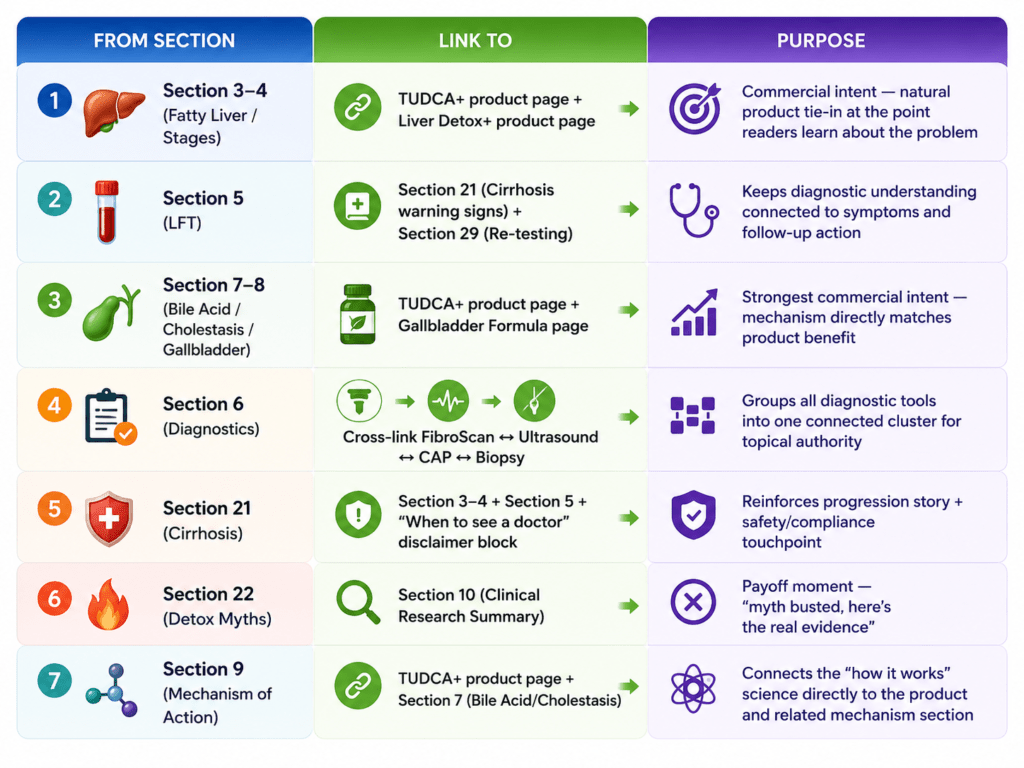
Strengthen every reader journey with smart internal links that guide every next step.
This isn’t a section readers will see directly — it’s a guide for how different parts of the article should connect to each other and to your product pages.
Sections 3–4 (Fatty Liver / Stages) → TUDCA+ and Liver Detox+ product pages
These sections explain what fatty liver is and how it progresses. Since readers here are learning about the problem itself, it makes sense to point them toward the two products most directly related to that problem.
Section 5 (LFT) → Section 21 (Cirrhosis warning signs) and Section 29 (Re-testing)
A reader learning about liver function tests will naturally want to know two things next: what happens if results are concerning (Section 21), and how often to check again (Section 29). Connecting these keeps the reader’s journey logical.
Sections 7–8 (Bile Acid / Cholestasis / Gallbladder) → TUDCA+ product page and Gallbladder Formula page
This is where the reader’s interest is closest to a buying decision, since they’re reading about a problem your products directly address. Both relevant products are linked here.
Section 6 (Diagnostics) → FibroScan, Ultrasound, CAP, and Biopsy subsections linked to each other
These four topics are closely related, so instead of treating them as separate islands, they should be linked as one connected group — helping readers move between related diagnostic topics easily.
Section 21 (Cirrhosis) → Sections 3–4, Section 5, and a “when to see a doctor” disclaimer block
Someone reading about cirrhosis warning signs will likely want to understand the earlier stages that lead there (Sections 3-4), how it’s tested (Section 5), and — importantly — a clear reminder to see a doctor rather than self-diagnose.
Section 22 (Detox Myths) → Section 10 (Clinical Research Summary)
After busting myths, readers naturally ask “okay, so what does actually work?” Linking to the research summary gives them that evidence-based answer right when they’re looking for it.
Section 9 (Mechanism of Action) → TUDCA+ product page and Section 7 (Bile Acid/Cholestasis)
This section explains how TUDCA works at a cellular level. Linking to the product page makes sense here since the reader now understands the “why” behind it, and linking back to Section 7 reinforces the connection to bile acid health.
34. Conclusion — Your Liver Deserves This Kind of Attention
Let’s be honest — your liver rarely gets the credit it deserves. It works quietly, every single day, filtering, processing, protecting — and it does this without ever asking for a break.
Throughout this guide, you’ve unlocked a lot: how fatty liver actually develops, what your LFT numbers really mean, why bile acid balance matters so much, and how TUDCA works at a cellular level to support your liver the way real science backs it up. You’ve also seen the myths busted, the mistakes to avoid, and the simple daily habits that make a genuine difference.
Here’s the one thing worth remembering above everything else: timing changes everything. Catching liver stress early — before symptoms even show up — is the difference between a full recovery and a much harder road ahead.
You don’t need to overhaul your entire life overnight. You just need to start. A baseline test. A few honest lifestyle changes. And, if it fits your journey, mechanism-backed support like TUDCA+ — not as a shortcut, but as a genuine ally alongside real change.
Your liver has been working for you, silently, for years. Now it’s your turn to work for it.
Ready to give your liver the support it’s been quietly asking for?
Explore TUDCA+ — Fitness Veda’s science-backed, mechanism-first liver support formula, made for real results, not empty promises.
Not sure where to start? Talk to your doctor, get your baseline LFTs done, and take the first confident step toward a healthier liver — today.